By Marcela Ayres
BRASILIA, Oct 7 (Reuters) - Brazil presidential candidate Senator Flavio Bolsonaro said on Wednesday his team was studying constitutional amendments to revise parts of a planned consumption-tax reform — alongside other fiscal measures — arguing the current design would leave the country with an excessively high tax burden.
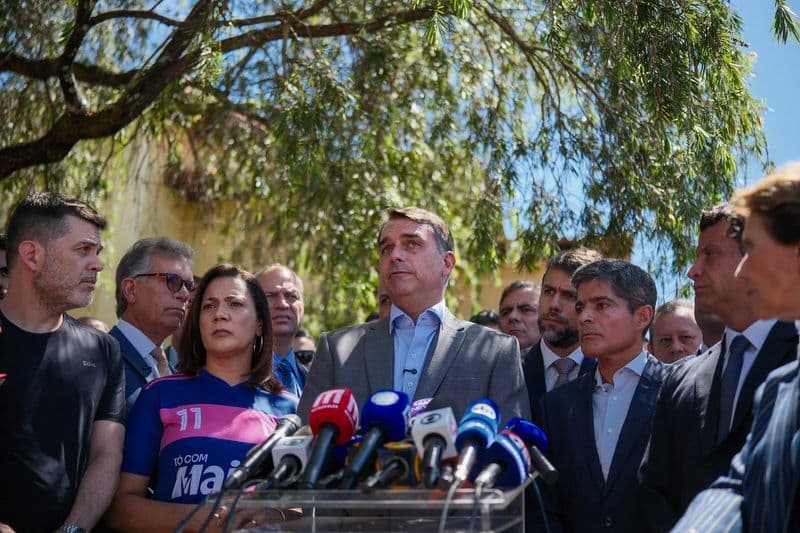
“There are several constitutional amendments that are possible,” Bolsonaro told reporters, citing “aspects of the tax reform” among measures he would pursue if elected, alongside lowering the age of criminal responsibility, ending presidential reelection and implementing a political reform.
In 2023, leftist President Luiz Inacio Lula da Silva approved the consumption-tax reform, a long-awaited overhaul of Brazil’s tax system, set to begin taking effect next year, which will consolidate multiple levies into a dual value-added tax administered at the federal and regional levels.
“I support modernizing our tax system, which is genuinely too complex,” Bolsonaro said.
The reformed consumption tax’s effective VAT rate — estimated to be about 28% by economists but not yet finalized by the government - would be too high, Bolsonaro said.
Bolsonaro also said he wanted to reduce payroll taxes and ensure that “more of Brazilian workers’ income stays with them rather than the government.”
On Tuesday, the senator’s top economic adviser, Daniella Marques, told local media that a Bolsonaro administration would review a broad range of tax measures enacted under Lula, including a dividend tax that took effect in January.
Marques served in the elder Bolsonaro’s government. She said that administration had previously only proposed taxing dividends alongside a reduction in corporate income taxes.
Bolsonaro would also eliminate the 12% tax on crude oil exports introduced this year by Lula’s government, Marques said, describing the levy as an “aberration.”
Lula introduced the tax to help finance fuel-tax relief for Brazilians amid a global oil-price spike linked to the US-Israeli conflict on Iran.
Other tax measures on the chopping block include reversing increases to the Financial Transactions Tax (IOF) on corporate credit operations, foreign-exchange transactions, and certain private pension investments, Marques said.
By contrast, Lula’s platform pledged to deepen efforts to promote “tax justice” and reduce inequality through the elimination of tax distortions and privileges, while implementing the consumption-tax overhaul approved during his administration.
Lula this year introduced a tax on dividends to help finance an tax exemption on higher income for middle-income earners, while his administration has argued for further cuts to tax exemptions and the elimination of what it views as inefficient tax incentives.
Bolsonaro, the eldest son of ex-President Jair Bolsonaro, outperformed expectations to finish ahead of leftist incumbent President Luiz Inacio Lula da Silva in Sunday’s first round. The rivals go head-to-head in an October 25 runoff.
DEBT RESTRUCTURING
Amid near-record levels of household debt in Brazil, Senator Bolsonaro also said his government would buy debt from over-indebted consumers and refinance it through state-owned lender Caixa Economica Federal.
Borrowers would also gain access to new credit lines to help finance small businesses, he said.
Lula, like Bolsonaro, has also pledged to purchase debt as part of a campaign promise.
The government said it will hold an auction in November to buy and restructure household debt, spending 15 billion reais to acquire up to 150 billion reais of delinquent loans at discounts of at least 90%. The program is expected to cover about half of the debt stock deemed eligible.
Households would then be able to clear overdue obligations at the discounted value, with the full benefit of the write-down passed through to borrowers.
(Reporting by Marcela Ayres; Editing by Oliver Griffin and Aurora Ellis)