JERUSALEM, Nov 17 (Reuters) - Israel’s parliament voted on Tuesday to select a new speaker opposed to the agenda of Benjamin Netanyahu, a potential first step in rolling back the prime minister’s divisive political agenda even as his main rival struggles to form a government.
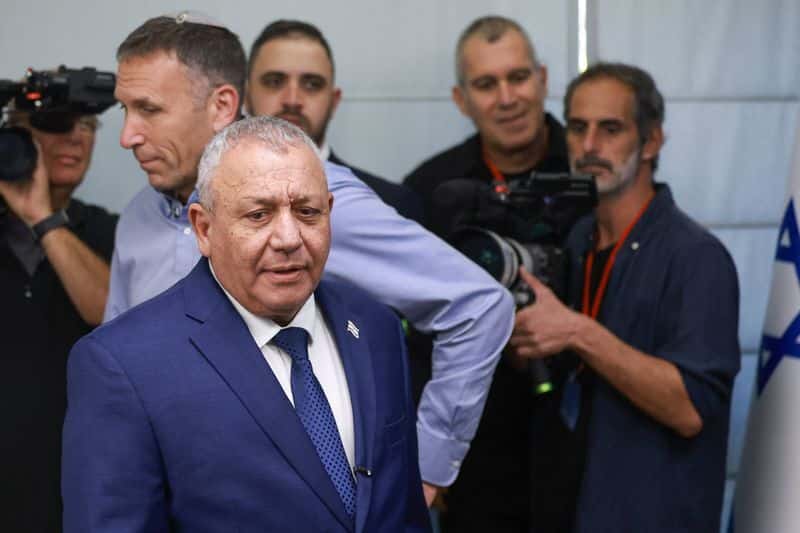
Parties led by Gadi Eisenkot, Netanyahu’s main competitor in an inconclusive October election, voted to install Matan Kahana, a member of Eisenkot’s centre-right Yashar party, with 66 voting in favor of Kahana and 52 voting for another candidate, according to the office of the spokesperson for the parliament.
Kahana replaces Amir Ohana, a member of Netanyahu’s Likud party.
“The Knesset of Israel is the home of all citizens of the State of Israel, and I intend to be the Speaker for everyone,” said Kahana in his inaugural speech.
In Israel’s unicameral 120-seat parliament, known as the Knesset, the speakership is a powerful position that wields considerable influence, including over what legislation is brought to a vote.
Kahana will have the ability to advance bills prioritised by the Eisenkot-led bloc and other parties backing the former general in his bid to become prime minister.
These include establishing an independent inquiry into the October 7, 2023, Hamas attack, which Netanyahu has opposed; imposing term limits on the prime minister; and repealing laws passed by the previous Netanyahu-led government that critics said curtailed the powers of the judiciary.
Netanyahu’s Likud party condemned the vote, saying lawmakers elected Kahana with “the votes of terror supporters.” Throughout the election campaign, Netanyahu attacked Israel’s Arab-led parties saying that they represent an existential threat to Israel, in attacks that the parties condemned as racist and discriminatory.
Members of the Eisenkot-led bloc have also been appointed to chair several key parliamentary committees, which play an important role in advancing legislation.
The parliament was sworn in on November 10 without a new government, after a deadlocked October 27 general election stripped Netanyahu of his majority but left his main rivals with no clear path to power.
DEADLOCKED ELECTION AFTERMATH
President Isaac Herzog has tasked Eisenkot, who heads the centre-right Yashar political party, with forming a government. However, the former chief of the military also lacks a majority and will likely have to compromise on some campaign promises if he is to secure the support needed to form a government.
Netanyahu remains caretaker prime minister until a government is formed. His right-wing Likud’s alliance with far-right and ultra-Orthodox parties outperformed election expectations but still lost its majority. It now holds 53 of the Knesset’s 120 seats.
Eisenkot’s Yashar party and patchwork coalition partners hold just 48 seats. But they have potential allies in the parties representing Israel’s Arab minority, which hold 19 seats and are aligned with Eisenkot in their vehement opposition to Netanyahu.
If no one is able to form a government, another election will be held next year.
Netanyahu has sought to cast doubt on the election results by baselessly alleging voter fraud by Arabs, who make up a fifth of the population. Election officials have said that they are probing potential misconduct but that they have seen no evidence of fraud that could have influenced the vote’s outcome.
Israel’s Channel 12 News reported on Sunday that law enforcement was investigating whether officials in Netanyahu’s office had deliberately planted information that prompted an inquiry into alleged vote-buying in Arab communities.
Netanyahu’s office has dismissed the Channel 12 report as “false”.
(Reporting by Alexander Cornwell, Editing by Hugh Lawson and Sanjeev Miglani)