By Tim Kelly
TOKYO, Nov 19 (Reuters) - Japan’s dispute with China over Prime Minister Sanae Takaichi’s remarks on Taiwan has spread from diplomatic protests to export restrictions by Beijing on critical minerals used in everything from cars and semiconductors to military equipment.
Here are the main developments in Japan’s spat with China.
Oct 31, 2025 — Chinese President Xi Jinping meets Takaichi at the APEC summit in South Korea. They agree to pursue stable relations, but Beijing subsequently protests over her meeting with Taiwan’s representative.
Nov 7 — Takaichi tells parliament that Chinese action against Taiwan that also threatened Japan’s survival could prompt a Japanese military response. Her remarks broke with previous Japanese leaders who had been reluctant to publicly discuss Taiwan contingencies.
Nov 13 — China demands that Takaichi retract her remarks, warning that Japan must otherwise bear the consequences. Beijing had earlier said her remarks contradicted the spirit of a 1972 diplomatic accord under which Japan recognized it rather than Taiwan as the sole legal government of China.
Nov 14 — Beijing cautions its citizens against visiting Japan and warns of a “crushing” military defeat if Tokyo intervenes over Taiwan.
Nov 18 — Chinese and Japanese diplomats meet in Beijing without a breakthrough. China repeats its demand for a retraction, while Japan says Takaichi’s remarks reflect long-standing policy.
Nov 19 — China tells Japan its seafood import procedures are insufficient, indicating a renewed blanket ban just months after partially lifting earlier restrictions.
Dec 6 — Japan says Chinese fighter jets directed targeting radar at Japanese military aircraft near Okinawa in two encounters. Beijing disputes the account.
Jan 6, 2026 – China bans exports of dual-use goods — items with civilian and military applications — to Japanese military users and for purposes that it says would strengthen Japan’s military. Japan protests.
Jan 26 – Takaichi says her remarks did not mean Japan would automatically fight if China and the United States clashed over Taiwan, but warns that abandoning U.S. forces could undermine their alliance. She does not retract her original comments.
Feb 24 – Beijing prohibits dual-use exports to 20 Japanese entities, including units of Mitsubishi Heavy Industries, and places another 20 under tighter scrutiny.
Mid-2026 — Japanese companies increasingly warn that critical minerals shortages are affecting their businesses. Chinese customs data show no shipments of gallium, dysprosium, terbium or yttrium to Japan in June, extending months of disruption to supplies.
Nov 9 — Under a September trade truce extension with Washington, Beijing keeps its export controls, including curbs on rare earths, on hold until Jan. 10, 2027. Separate restrictions on dual-use exports to Japan remain in force.
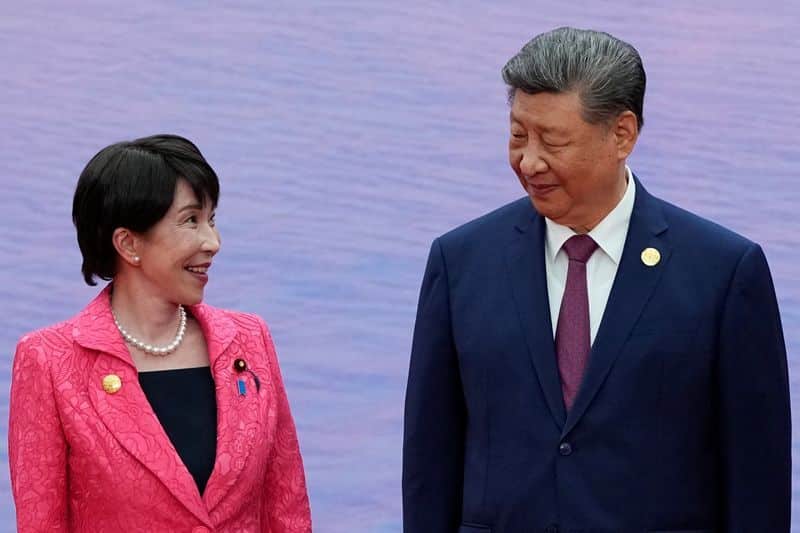
Nov 19 — Takaichi and Xi shake hands at the APEC summit in Shenzhen, their first encounter since her Taiwan remarks a year earlier. She was given a low-key welcome to China that fell short of the fanfare that greeted other leaders, and did not hold any bilateral talks with Xi.
(Reporting by Tim Kelly; Editing by Raju Gopalakrishnan)