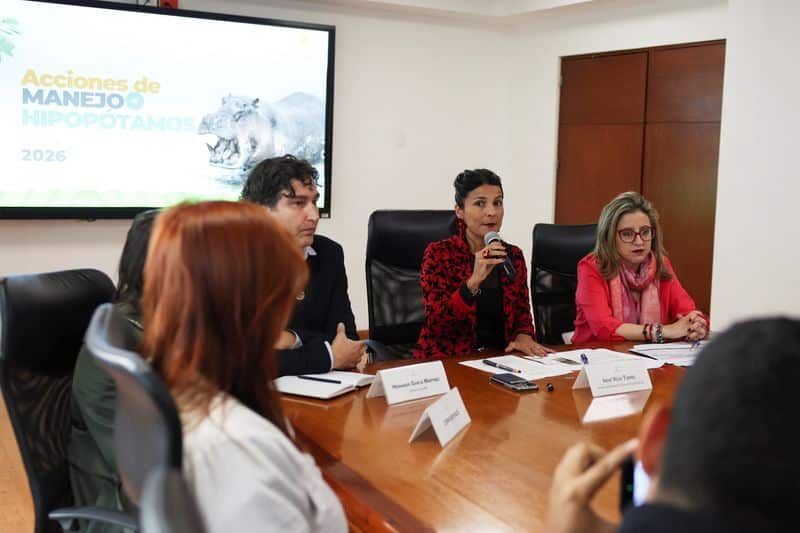
NEW YORK, April 13 (Reuters) - Colombia will launch a plan in the second half of 2026 to control its invasive hippopotamus population, including euthanizing an initial 80 animals, Environment Minister Irene Velez said on Monday.
The South American country is home to some 200 hippos in the central region near the Magdalena River. If control measures are not adopted, the population could increase to as many as 1,000 by 2035, Velez said.
“We must act to reduce the hippopotamus population. These actions are essential to protect our ecosystems and our native species,” Velez told journalists, noting that population growth threatens species like river turtles and manatees and causes water pollution. “We believe there may be approximately 80 individuals that could be subject to the measure (of euthanasia).”
Colombia’s first four hippos were illegally imported in the 1980s by the late drug trafficker Pablo Escobar, who established a zoo on one of his properties. The population has since grown largely unchecked, despite some efforts by provincial environmental authorities.
The program announced on Monday has a budget of 7.2 billion pesos ($1.98 million) and includes measures like confinement and relocation. Though Colombia began talks months ago with eight governments including India, Mexico, Philippines, Ecuador, Peru and South Africa to possibly transfer some animals to zoos or sanctuaries in those countries, the necessary authorizations have not yet been obtained, Velez said.
The Colombia hippos have genetic defects due to inbreeding, which has reduced some institutions’ interest in them.
(Reporting by Luis Jaime Acosta; Writing by Jorge Ollero Castela; Editing by Bill Berkrot)