By Olivia Le Poidevin
GENEVA, April 13 (Reuters) - The International Committee of the Red Cross said it was deeply concerned by attacks on medical workers in Lebanon after a deadly strike on a Red Cross centre in the country on Monday and the death of a volunteer a day earlier.
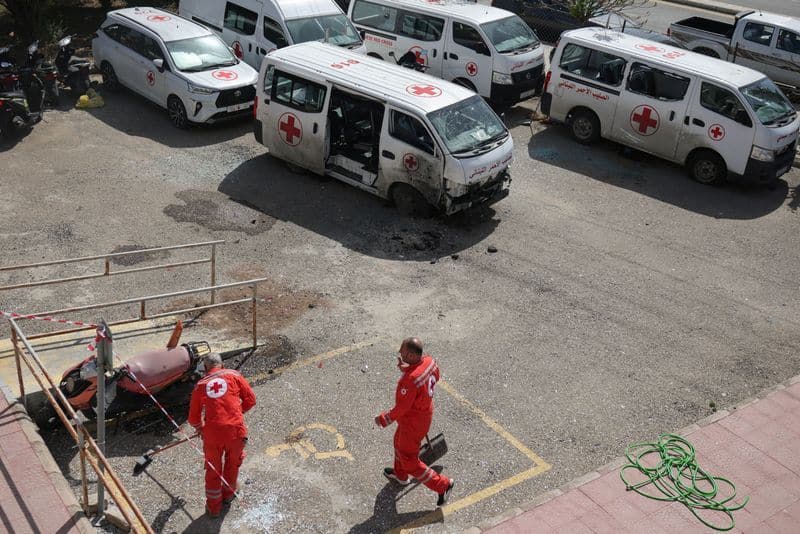
Lebanon’s state news agency reported that Monday’s strike, which it said was carried out by Israel, killed one person and damaged Lebanese Red Cross vehicles.
The ICRC said the Lebanese Red Cross centre in the district of Tyre, a city on Lebanon’s coast, was hit by the strike. It did not comment on who was responsible or give details of the victim.
The Israeli army did not immediately respond to a request for comment on Monday’s incident.
On Sunday, the Lebanese Red Cross said one of its volunteers, Hassan Badawi, had died from his injuries after a strike by an Israeli drone in the district of Bint Jbeil in southern Lebanon.
Israel’s military said it had struck a “Hezbollah terrorist” in the area and that the incident was under review after it received reports of injury to a Red Cross team.
Agnes Dhur, head of the ICRC delegation in Lebanon, said in a statement on Monday: “The loss of those who dedicate their lives to saving others is gravely concerning, given the impact on the civilians who depend on their help.”
“Humanitarian and medical personnel must be protected. They must be allowed to reach and help the wounded, and return unharmed,” she added.
The latest war in Lebanon began on March 2, when Lebanese armed group Hezbollah fired at Israeli positions in support of its patron Iran.
Israel has since escalated its air and ground campaign in the country where its operations have killed nL1N40V02V more than 2,000 people, displaced more than one million, and triggered a warning nL8N40S1AG that hospitals could run out of life-saving supplies.
(Reporting by Olivia Le Poidevin, Editing by Miranda Murray, Aidan Lewis)