By Maria Cheng
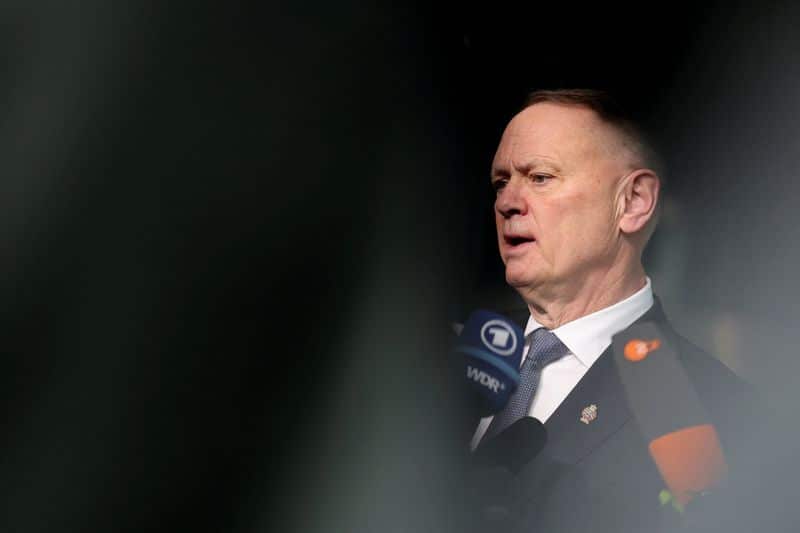
HALIFAX, Nova Scotia, Nov 21 (Reuters) - Canadian Defense Minister David McGuinty said he has not seen an alleged secret US memo setting out restrictions on cooperation between Canadian and US militaries and said the armed forces in the two countries continue to work closely together.
McGuinty told Reuters Saturday on the sidelines of a security conference in Halifax that he had not seen a memo reportedly sent by US Secretary of War Pete Hegseth and cited by the Washington Post, imposing new constraints on work between Canadian and US militaries.
The Post story included a statement from the chief Pentagon spokesperson saying Hegseth’s directive would not affect intelligence sharing or collaboration through NATO or the North American Aerospace Defense Command, or NORAD, which protects the airspace of both countries.
“I still see no daylight between what we’re doing, military to military, and otherwise,” McGuinty said. He said that Canadian and American militaries continue to work “hand in glove” on issues including ships working in the Caribbean to stop the trafficking of cocaine, fentanyl and other illegal drugs, on integrated missile systems and when fighter jets are scrambled across North America.
The Pentagon did not respond to a request for comment.
Despite US President Donald Trump’s repeated threats to annex Canada, McGuinty said he’s said no change in how the two countries’ militaries continue to work together.
“The 70-year relationship we have with the US under NORAD has been a frankly, extremely effective continental defense system and one that we want to continue to invest in and cooperate with,” he said.
McGuinty said Canada needed to assume more responsibility for its own defense and security, including in its vast Arctic region and that the country was working to build its own competitor to Starlink, to protect its sovereignty in communications.
He acknowledged that some of the recent changes in Canadian defense were prompted by threats made by Trump and that the rupture in the global order described by Prime Minister Mark Carney required a significant escalation in the country’s security investments.
Under Carney, Canada said it hit the NATO target of spending 2% of its GDP on defense for the first time last year and the government plans to increase that to 5% by 2035.
“We’ve been in a comfortable position for decades, but things have now changed,” McGuinty said.
(Reporting by Maria Cheng; Additional reporting by Phil Stewart in Washington, Editing by Toby Chopra)