By Hyunjoo Jin
SEOUL, March 20 (Reuters) - South Korean authorities said on Friday that Iranian attacks on Qatar’s energy facilities raise uncertainty, but downplayed concerns about disruption to its liquefied natural gas (LNG) supply, citing the availability of alternative sources.
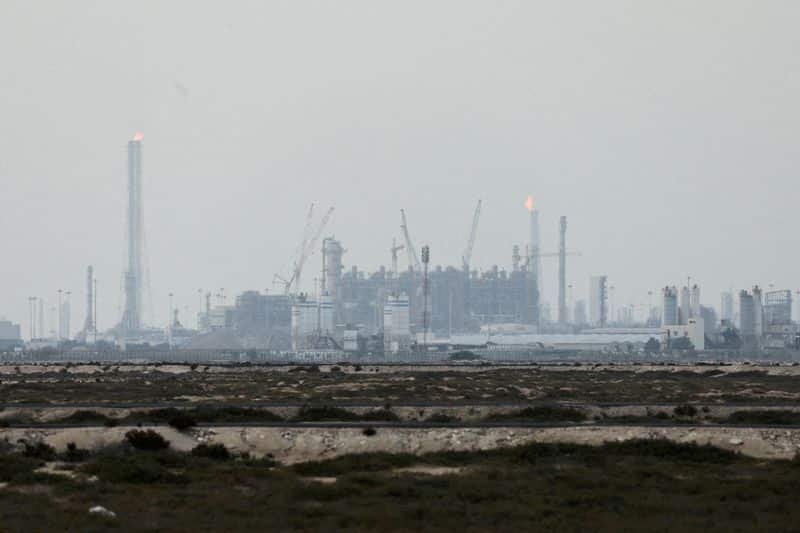
State-owned QatarEnergy said it will have to declare force majeure on long-term contracts for up to five years for LNG supplies bound for Italy, Belgium, South Korea, and China after the Iranian attacks knocked out 17% of LNG export capacity.
South Korea is the world’s No.3 LNG importer after China and Japan, using gas for power generation, manufacturing and heating. Last year, it imported 47.77 million metric tons of the fuel, of which 7.16 million metric tons was from Qatar, according to data from analytics firm Kpler.
Qatar is South Korea’s third-biggest source of LNG after Australia and Malaysia.
“Given that the share of imports from Qatar is relatively low (at around 14% in 2026) and alternative supply sources are available, there are no issues regarding gas supply and demand,” South Korea’s Industry Ministry said in a statement, without elaborating on the potential alternative sources.
“However, as uncertainty has been growing, we plan to closely monitor supply, demand, and price trends and respond accordingly.”
State-run Korea Gas Corp (KOGAS) said on Friday it has inventory levels of LNG exceeding mandatory reserve requirements. “KOGAS has sufficient capabilities to respond to supply and demand crises,” it said in a statement.
The government would prioritise managing LNG supplies by increasing coal and nuclear output, while reducing reliance on gas-fired power generation, Democratic Party lawmaker Ahn Do-geol said earlier this week.
Gas-fired power made up 27% of the country’s electricity output in 2025, with the rest mostly from coal, nuclear and renewables.
Limits capping coal power output would be lifted, Ahn said, while maintenance work at six nuclear reactors would be completed early to boost nuclear utilisation.
Asian LNG buyers have been seeking replacement LNG supply since the U.S.-Israeli war on Iran halted tanker traffic through the Strait of Hormuz and disrupted supplies from Qatar.
Kogas is unlikely to face difficulties replacing Qatari volumes with spot purchases, said Alex Siow, lead Asia gas analyst at analytics firm ICIS, as it is less price sensitive compared to other buyers.
He added that South Korea had already moved to increase coal-fired generation, while a new nuclear power plant coming online in the second half of the year will also help.
(Reporting by Hyunjoo Jin, Jack Kim, additional reporting by Emily Chow; Editing by Cynthia Osterman, Ed Davies, Sonali Paul and Lincoln Feast.)