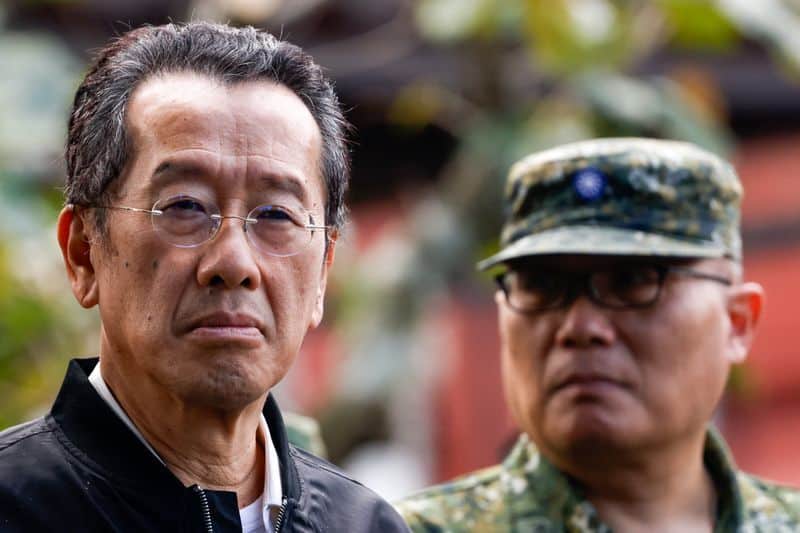
TAIPEI, March 25 (Reuters) - The United States has “quite a high” sense of urgency in helping Taiwan strengthen its military capabilities and is working to help speed up delayed weapons deliveries, the island’s Defence Minister Wellington Koo said on Wednesday.
Taiwan, which faces a rising military threat from China, has complained of repeated delays to weapons ordered from the United States, the most important international backer and arms supplier to the island, which Beijing claims as its territory.
One of the main delays is to a 2019 order for 66 Lockheed Martin F-16V fighters, equipped with more advanced avionics, weapons and radar systems to better face down the Chinese air force, including its stealthy J-20 fighters.
Deliveries of many of the weapons systems ordered have already begun or arrived, Koo told reporters at parliament.
“As for the portions that have experienced delays, the United States has already set up a special project team to accelerate the relevant weapons programmes and help us catch up to schedule as quickly as possible,” he said.
“I have also repeatedly explained that the U.S. sense of urgency in helping us strengthen our self-defence capabilities as quickly as possible is in fact quite high.”
Deliveries of F-16V fighter jets for Taiwan will begin this year with production at “full capacity”, the ministry said at the weekend.
Last week, Michael Miller, director of the U.S. Defense Security Cooperation Agency, said he signed a directive in 2023 to prioritise Taiwan above other buyers, adding that security cooperation and assistance for Taiwan was a top priority.
The United States is bound by law to provide Taiwan with the means to defend itself, and arms sales are a constant source of friction between Washington and Beijing, which has demanded that they stop.
(Reporting by Ben Blanchard; Editing by Clarence Fernandez)