By Sergio Goncalves and Andrei Khalip
LISBON, Jan 14 (Reuters) - Portugal’s presidential election on Sunday is all but guaranteed to require a runoff vote for the first time in 40 years amid growing political fragmentation, and the race for a place in the second round is still wide open, a new opinion poll showed.
The presidency is a largely ceremonial role in Portugal but wields some key powers, including in some circumstances to dissolve parliament, to call a snap parliamentary election, and to veto legislation.
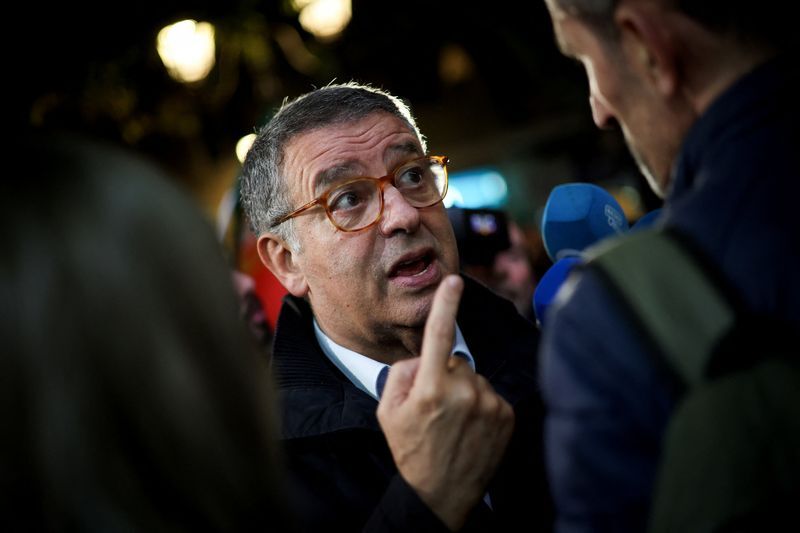
Andre Ventura, the far-right, anti-establishment leader of the main opposition party Chega, is marginally ahead on 24% of voting intentions, closely followed by Socialist Antonio Jose Seguro on 23%, according to the survey by Catolica University pollsters published by Publico daily on Wednesday.
Joao Cotrim de Figueiredo, a member of the European Parliament from the pro-business Liberal Initiative party, is also within striking range with 19%, given a 2.2% margin of error in the poll, which surveyed 1,770 voters.
Two other candidates, including Luis Marques Mendes backed by the ruling centre-right Social Democrats (PSD), have 14% each, the poll showed.
Smaller tracking polls in the past week showed even tighter distances between the top five presidential candidates.
POLITICAL FRAGMENTATION
In the five decades since Portugal threw off its right-wing dictatorship, a presidential election has only once before - in 1986 - required a runoff, highlighting how complex the political landscape has become with the rise of the far-right and voter disenchantment with the mainstream PSD and Socialist parties.
“Fragmentation of the electorate continues, making it likely that candidates from the two traditional parties will receive fewer votes than their parties secured” in last year’s parliamentary election, which saw Chega overtake the Socialists, said political scientist Antonio Costa Pinto.
While Ventura led the latest survey, analysts point to his high rejection rate of more than 60% of voters in all recent opinion polls, which suggest that he would lose a runoff against any of the top four contenders.
But reaching the second round will likely be “a victory in itself” for Ventura, Costa Pinto said, giving Chega greater leverage with the minority centre-right government.
Jose Castello Branco of Lisbon’s Catolica University said one thing appeared certain in what is “a completely open race” - that Ventura “is cementing his position in the Portuguese political spectrum” as the leader of the opposition.
(Writing by Andrei KhalipEditing by Gareth Jones)