By Jonathan Allen and Joseph Ax
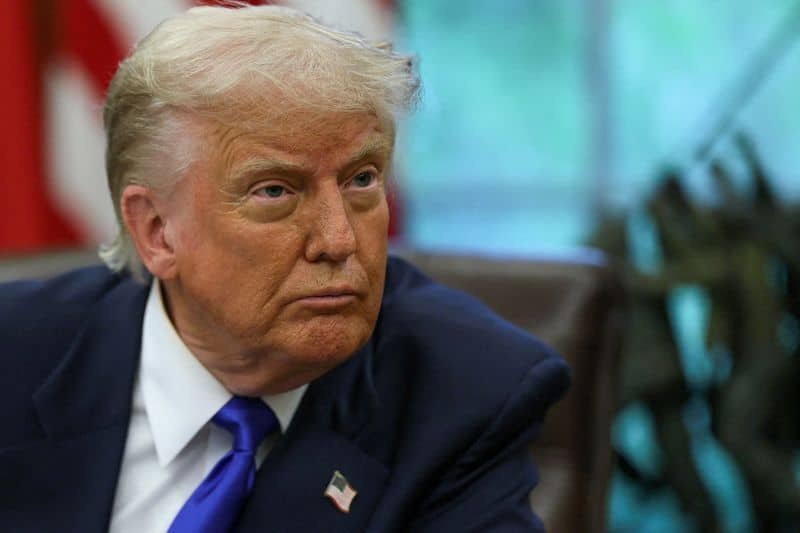
Jan 14 (Reuters) - U.S. President Donald Trump said on Wednesday he would cut off federal funding next month for any state that includes sanctuary cities, expanding his attacks on mostly Democratic-run cities following days of clashes in Minneapolis.
Trump’s vow, which he made on social media, repeated comments he first made during a speech in Detroit on Tuesday, when he said he would halt payments starting on February 1 to any state that had sanctuary cities, which limit local authorities’ cooperation with federal immigration officers.
Any such effort would undoubtedly be challenged in court. A federal judge in August blocked a previous attempt to freeze funding for more than 30 sanctuary jurisdictions unless they cooperated with his immigration crackdown.
SHOOTING SPARKS PROTESTS
Trump’s declaration came amid escalating tensions in Minneapolis, a week after a U.S. immigration officer fatally shot 37-year-old Renee Good, a U.S. citizen, in her car.
The shooting has sparked protests in the city and elsewhere, while the Trump administration has responded by surging hundreds of additional federal agents to Minneapolis despite objections from Democratic Mayor Jacob Frey.
There are nearly 3,000 federal officers in the Minneapolis area, according to state officials, a total that dwarfs the city’s 600 sworn police officers.
Cellphone video shared on social media, as well as video from Reuters and other news outlets, have captured chaotic clashes between federal agents sweeping the city for immigrants living in the country illegally and residents shouting obscenities and blowing whistles.
In some instances, officers have responded to protesters with pepper balls and pepper spray.
FEDERAL INVESTIGATION INTO SHOOTING UNDER SCRUTINY
City and state officials have accused federal officers of indiscriminate street stops based on residents’ apparent ethnicity or race.
The head of the Oglala Sioux Tribe in South Dakota called on the U.S. government to release three tribal members detained by Immigration and Customs Enforcement agents in Minneapolis.
The tribal members were homeless and living under a bridge when they were detained by ICE last week, according to a Tuesday letter from Oglala Sioux President Frank Star Comes Out to federal officials.
Star Comes Out said the tribal members were U.S. citizens and their detention was a violation of treaties the tribe entered into with the United States.
Trump and other administration officials have defended the Good shooting as self-defense and said she was trying to run the officer over with her car, despite video showing she was turning her wheels away from him as she drove forward.
Minnesota authorities have opened a criminal investigation into whether the agent who killed Good broke state law after they said the federal government withdrew from a joint investigation. At least six federal prosecutors resigned over a request from Justice Department leaders to investigate Good’s widow, Reuters has reported, deepening scrutiny of the way the department is conducting the investigation.
MINNESOTA ASKS JUDGE TO HALT OPERATION
Trump did not specify which states would face funding cuts under his threatened action, but the U.S. Justice Department published a list of “sanctuary jurisdictions” in August that are located in 19 states and the District of Columbia. Nearly 160 million people live in those states, just under half of the U.S. population.
On Wednesday morning, the Minnesota attorney general’s office asked U.S. District Judge Kate Menendez to issue a temporary order halting the Trump administration’s dramatic surge in immigration agents being sent into Minneapolis and the surrounding areas.
Brian Carter, a lawyer for Minnesota, told the judge that Trump had sent about 2,800 “masked, heavily armed agents” into the area, exceeding the number of police officers in Minneapolis and neighboring Saint Paul combined, who the state says are engaged in a “pattern of unlawful, violent conduct,” including racial profiling and warrantless forced entry into residents’ homes.
“The harm here is ongoing, your honor, and it is intolerable,” he said.
Andrew Warden, a Justice Department lawyer representing the Trump administration, said the federal government would fight any state efforts to restrain federal law enforcement activities.
The judge set deadlines for responses from both sides next week ahead of deciding how to rule.
(Reporting by Jonathan Allen; Additional reporting by Andrew Hay and Brad Brooks; Writing by Joseph Ax; Editing by Rod Nickel)