By Joey Roulette and Cassell Bryan-Low
WASHINGTON, Jan 16 (Reuters) - Iran’s crackdown on dissidents is shaping up as one of the toughest security tests yet for Elon Musk’s Starlink, which has served as a lifeline against state-imposed internet blackouts since its deployment during the war in Ukraine.
SpaceX, which owns Starlink, made the satellite service free for Iranians earlier this week, placing Musk’s space company at the center of another geopolitical hot spot and pitting a team of U.S.-based engineers against a regional power armed with satellite jammers and signal-spoofing tactics, according to activists, analysts and researchers.
How SpaceX withstands Iranian attacks on its most lucrative line of business is expected to be closely watched by U.S. military forces and intelligence agencies that use Starlink and its military-grade variant Starshield, as well as China, whose own nascent satellite internet constellations are set to rival Starlink in the coming years. With SpaceX weighing a public listing this year, the situation in Iran also represents a high-profile showcase for Starlink to investors.
“We’re in this weird early part of the history of space-delivered communications where SpaceX is the only true provider at this scale,” said John Plumb, the former Pentagon space policy chief under President Joe Biden.
“And these repressive regimes think they can still turn off communications, but I think the day is coming where that’s just not possible,” he said.
PROTESTERS USE STARLINK TO SEND CRACKDOWN VIDEOS
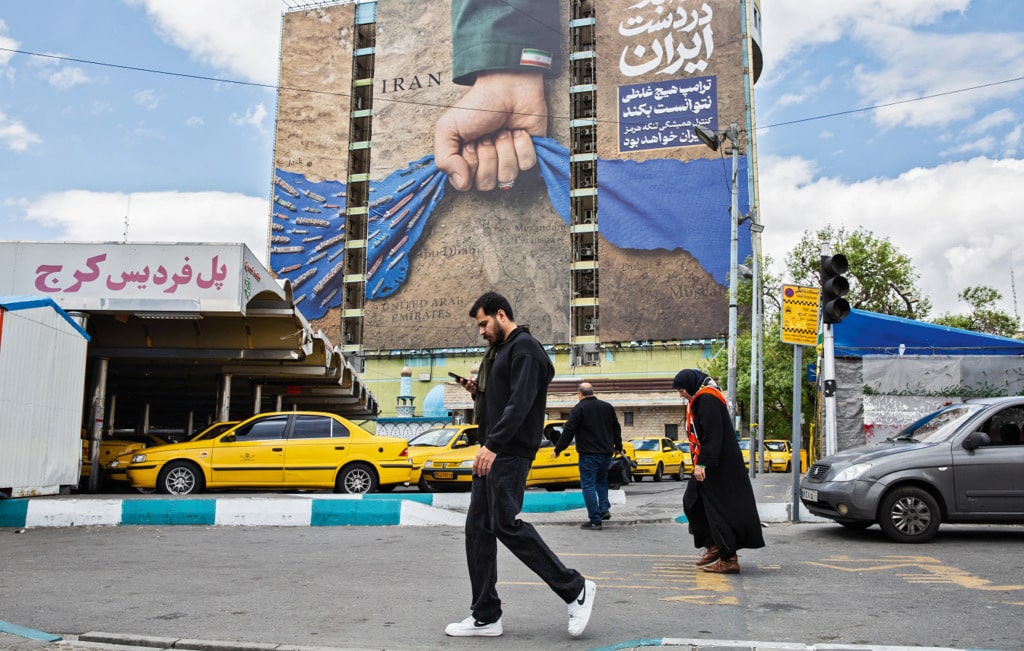
Thousands of people protesting Iran’s clerical rule are reported to have been killed in the past week, while Tehran’s order to restrict communications makes it difficult to discern the full extent of its violent crackdown on dissent.
Starlink, which is harder for Iran to tamper with than cable and cellphone tower networks, has become crucial for documenting events on the ground.
Raha Bahreini, an Iran researcher at Amnesty International, said they had verified dozens of videos from Iran, including footage of protesters killed or injured by Iranian forces, and believe that almost all of them came from people who had access to Starlink. She added, however, that the ongoing communications restrictions have impeded human-rights organizations’ communications with people in Iran in efforts to assess the scale of the violence.
Starlink is banned in Iran, yet tens of thousands of terminals may have been smuggled into the country, although it remains unclear how many are in use, according to Holistic Resilience, a U.S. nonprofit that has helped deliver Starlink terminals to Iranians and says it is working with SpaceX to monitor what it describes as Iranian attempts to jam the system.
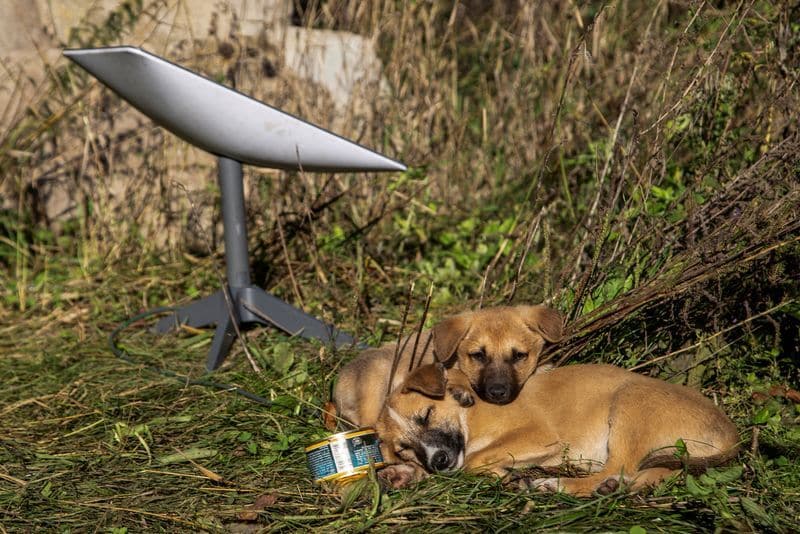
Consumer Starlink terminals are rectangular antenna dishes that come in two sizes - one roughly the size of a pizza box and a smaller “mobile” one the size of a laptop.
The Iranian mission to the United Nations in New York declined to comment on Thursday in response to Reuters’ questions.
Iranian Foreign Minister Abbas Araqchi, speaking to Al Jazeera TV on Monday, said the internet had been cut off “after we confronted terrorist operations and realized orders were coming from outside the country.”
JAMMERS AND FAKE GPS SIGNALS
Starlink, the first massive internet-from-space constellation of its kind, has emerged as a crucial tool for communications in wartime and remote areas. The network, which drove SpaceX’s $15 billion revenue in 2024, has expanded the geopolitical power of Musk, who in 2022 asserted control over how and where it was being used by Ukrainian troops fighting back Russian forces.
Roughly 10,000 low-orbiting Starlink satellites zipping above user terminals at an orbital velocity of some 17,000 miles per hour (27,360 kph) make its signals much harder to locate and disrupt than traditional satellite systems designed with a larger, single satellite fixed over a given territory.
Iran is likely using satellite jammers to disrupt the Starlink signals, according to Holistic Resilience and other specialists. Iran also appears to be engaging in so-called spoofing, or broadcasting fake GPS signals to confuse and disable Starlink terminals, according to Nariman Gharib, an Iranian opposition activist and independent cyber espionage investigator based in Britain.
The GPS spoofing wreaks havoc on a Starlink terminal’s connection and slows internet speeds, said Gharib, who analyzed data from a terminal inside Iran.
“You might be able to send text messages, but forget about video calls,” he said.
IRAN TRIES TO LOCATE STARLINK TERMINALS
Though Starlink is not licensed to operate in Iran, Musk has repeatedly confirmed its presence on his social media platform X, spurring a yearslong effort by the Iranian government to counter the service. Amid protests over the death of Mahsa Amini in December 2022, Musk posted that nearly 100 Starlink terminals were active in the country.
Following the 12-day war between Iran and Israel in June, Iran’s parliament passed a law banning the use of Starlink, introducing severe penalties for those who use or distribute the unlicensed technology, according to Iranian state media.
Iran has also pursued diplomatic channels, urging a panel at the United Nations’ International Telecommunication Union last year to force the United States and Norway — where Starlink is internationally registered — to block the service.
At a July meeting, Iran told the board that Starlink’s use in the country is illegal and said an “invading country” had deployed its terminals on drones during a recent attack.
Iran told the board in November that it was struggling to locate and disable the terminals itself.
(Reporting by Joey Roulette in Washington and Cassell Bryan-Low in London; Additional reporting by Parisa Hafezi in Dubai, Supantha Mukherjee in Stockholm and Nayera Abdallah in Dubai; Editing by Joe Brock and Matthew Lewis)