By Brad Brooks, Joseph Ax and Renee Hickman
MINNEAPOLIS, Jan 16 (Reuters) - Newly released transcripts of 911 calls and emergency dispatch records detail the chaotic and dangerous scene that unfolded after a U.S. immigration officer fatally shot Renee Good in Minneapolis, an incident that has become a national flashpoint over President Donald Trump’s harsh immigration crackdown.
In one panicked call after another, witnesses told police what they had seen: Immigration and Customs Enforcement agents in the street, several shots fired at a driver, her vehicle slamming into other cars, blood everywhere.
“There’s 15 ICE agents and they shot her, like, ‘cause she wouldn’t open her car door,” one caller said, adding a stream of profanities.
“ICE fired shots into her windshield,” another caller said, as the operator urged the person to slow their breathing. “She’s bleeding.”
Later, as Good was being pronounced dead at a local hospital, police were trying to evacuate ICE officers from the scene while angry protesters cut down tape that had been used to secure the area, according to an incident report that recorded communications between emergency responders.
“ICE BEING SURROUNDED,” one person transmitted at 11:01 a.m., about 80 minutes after the shooting, according to the report.
THOUSANDS OF FEDERAL AGENTS SENT TO MINNESOTA
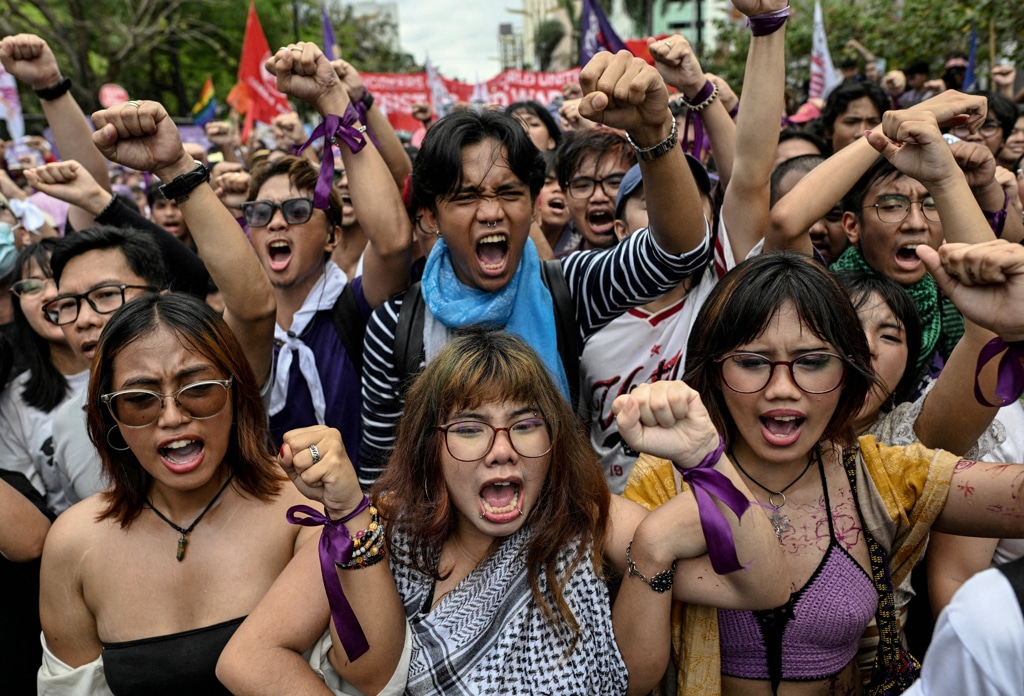
The city has seen increasingly tense confrontations between residents and federal officers since Good, a 37-year-old mother of three, was shot on January 7. Protests have spread to other cities, and more demonstrations are expected on Friday evening and this weekend.
Trump and other administration officials have defended the officer, Jonathan Ross, and accused Good of deliberately trying to kill him and other agents at the scene with her car. Videos of the incident show her turning her wheels away from the officers and Democratic city and state officials have rejected the government’s account as false.
The Trump administration has said Ross suffered injuries during the incident - although video shows him walking around after shooting Good - while noting he was involved months earlier in another enforcement stop that resulted in him being dragged behind a vehicle.
During that stop, in Bloomington, Minnesota in June 2025, Ross broke Roberto Carlos Munoz-Guatemala’s car window during a stop and reached inside his vehicle. Munoz-Guatemala attempted to drive away, dragging Ross with him, according to court records. Munoz-Guatemala was later convicted of assaulting a federal officer.
In trial transcripts obtained by Reuters, an attorney for the defense focused on whether Munoz-Guatemala understood that Ross was a law enforcement officer during the stop, given that Munoz-Guatemala had repeatedly asked Ross who he was.
Ross countered that Munoz-Guatemala “seemed to know who I was just by his demeanor,” and asserted that suspects often act confused about the identity of agents.
“I believe a lot of time people are on the phone and they’re waiting for people to get - to show up, especially with our line of work. They’ve got phone trees where they call and then protesters show up,” Ross told the court.
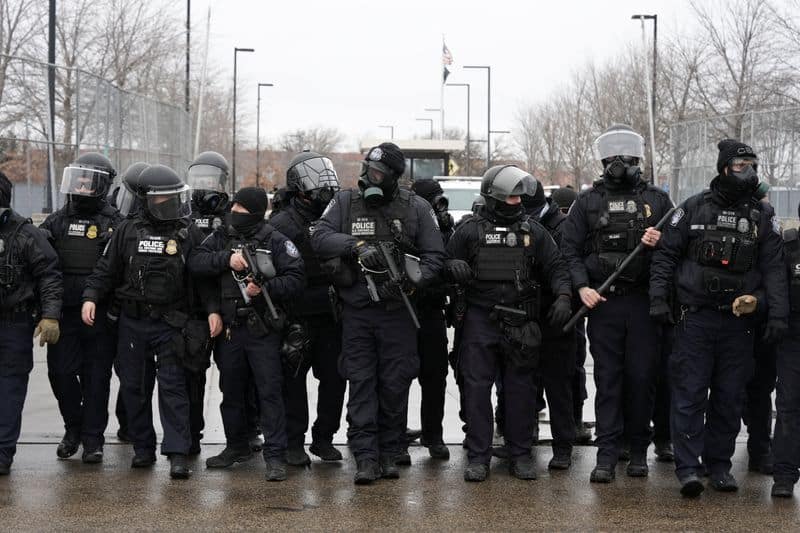
The Trump administration has sent nearly 3,000 federal agents to Minnesota, adding hundreds of additional officers in the aftermath of the Good shooting.
Trump has said the deployment was prompted in part by allegations of fraud among the state’s large Somali-American community. Trump has called Somali immigrants “garbage” and said they should be thrown out of the country.
Minnesota Democrats, including Minneapolis Mayor Jacob Frey, have decried the shooting and accused Trump of intentionally fomenting chaos.
Since the surge began, agents have arrested both immigrants and protesters, at times smashing windows and pulling people from their cars. Some have been shouted at for stopping Black and Latino U.S. citizens and demanding identification.
The Department of Homeland Security said on X that 12 “agitators” were arrested on Thursday night for assaulting law enforcement, without providing more details.
TRUMP THREATENS TO DEPLOY TROOPS
The first 911 call after the Good shooting arrived at 9:38 a.m., and paramedics were on the scene four minutes later, where they found her in her car, not breathing. She had four apparent gunshot wounds, including one to her head and two to her chest.
Emergency personnel attempted to revive her, both at the scene and in the ambulance on the way to the hospital. Hospital staff ended those efforts at approximately 10:30 a.m., according to the records.
Meanwhile, back on Portland Street, police were trying to prevent more violence, according to an incident report that recorded communications among first responders at the scene.
“CROWD GETTING HOSTILE,” the incident record reads at 9:50 a.m. “CONTACT WHO IS IN CHARGE OF FEDS AND HAVE THEM LEAVE SCENE.”
At 11:01 a.m., ICE agents were “being surrounded,” and protesters were throwing snowballs at them – but not at police, the report says. The agents finally managed to leave the scene by 11:20 a.m.
“CROWD CALMED DOWN NOW THAT ICE IS GONE,” it says at 11:38 a.m.
On Friday, at the spot where Good was shot and killed more than a week ago, a makeshift memorial continued to grow and attract clusters of visitors, despite frigid temperatures and falling snow.
Residents have cordoned off the spot where Good’s car slammed into a light pole, while hand-painted signs call for justice and include many anti-ICE slogans. Tarps were laid atop mounds of flowers to protect them from the wind and snow.
(Reporting by Brad Brooks in Minneapolis, Renee Hickman and Emily Schmall in Chicago and Joseph Ax in New York, editing by Deepa Babington)