By Menna AlaaElDin and Alexander Cornwell
Jan 21 (Reuters) - U.S. President Donald Trump has invited dozens of world leaders to join his Board of Peace initiative aimed at resolving global conflicts but diplomats say it could harm the work of the United Nations.
While some traditional allies of the U.S. have responded cautiously, and in a few cases have rejected Trump’s offer, others including nations that have long had strained ties with Washington such as Belarus have accepted.
WHAT IS TRUMP’S BOARD OF PEACE?
Trump first proposed the Board of Peace last September when he announced his plan to end the Gaza war. He later made clear the board’s remit would be expanded beyond Gaza to tackle other conflicts worldwide.
The U.S. president will be the inaugural chairman of the board and it will be tasked with promoting peace around the world and working to resolve conflicts, according to a copy of the draft charter seen by Reuters.
Member states would be limited to three-year terms unless they pay $1 billion each to fund the board’s activities and earn permanent membership, the charter says.
The White House has named U.S. Secretary of State Marco Rubio, Trump’s special envoy Steve Witkoff, former British prime minister Tony Blair and Trump’s son-in-law, Jared Kushner as members of the initiative’s founding Executive Board.
WHICH COUNTRIES HAVE ACCEPTED TRUMP’S INVITATION SO FAR?
Witkoff said on Wednesday that up to 25 countries had so far accepted the invitation to join the Board of Peace.
These include Middle East allies such as Israel, the United Arab Emirates, Bahrain and Egypt. NATO members Turkey and Hungary, whose nationalist leaders have cultivated good personal ties with Trump, have also agreed to take part.
Others who have accepted include Armenia and Azerbaijan, which reached a U.S.-brokered peace agreement last August after meeting Trump at the White House.
More controversially, Belarusian President Alexander Lukashenko, long shunned by the West over his country’s poor human rights record and backing for Russia’s war in Ukraine, has accepted Trump’s invitation, which comes amid a broader rapprochement between Washington and Minsk.
Russia, which has also seen frosty relations with Washington improve markedly as Trump courts President Vladimir Putin while accusing Kyiv of blocking efforts to end the Ukraine war, has not yet said whether it will join the Board of Peace.
Neither has China, which has often been at loggerheads with Trump but recently struck a delicate trade truce.
Russia and China are traditionally strong supporters of the United Nations, and both are veto-wielding members of the U.N. Security Council, so are likely to be cautious about any initiatives that could be seen as undermining the world body.
Trump, who has often criticised the U.N. as ineffective, played down concerns this week that he might want his Board to replace the world body, saying: “I believe you got to let the U.N. continue because the potential is so great.”
WHICH COUNTRIES HAVE REFUSED TO JOIN OR HAVE YET TO COMMIT?
The Board of Peace initiative, which comes amid a growing transatlantic rift over Greenland, tariffs and other issues, has drawn a cautious response from some close U.S. allies who are often uncomfortable with Trump’s belligerent, unilateralist, “America First” approach to international diplomacy.
Norway and Sweden have declined his invitation, while Italy’s Economy Minister Giancarlo Giorgetti said joining the board appeared problematic. Italian daily Il Corriere della Sera reported that joining a group led by one country’s leader would violate Italy’s constitution.
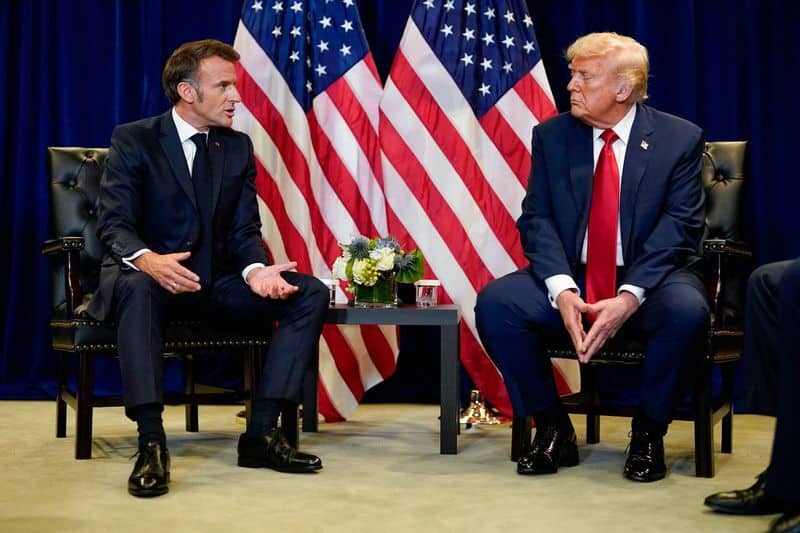
France also intends to decline the invitation, a source close to President Emmanuel Macron said, prompting Trump to threaten to hit French wines and champagnes with 200% tariffs unless Paris joined his board.
Canada said it has agreed “in principle” to join but that the details were still being worked out. Other key U.S. allies including Britain, Germany and Japan have not yet taken a clear public stance, though a German government spokesperson said Chancellor Friedrich Merz would not attend a signing ceremony for the board at the World Economic Forum in Davos.
Ukraine has said its diplomats are examining the invitation but President Volodymyr Zelenskiy has said it is hard for him to imagine being on any board with Russia after four years of war.
WHAT POWER WILL THE BOARD HAVE?
It remains unclear what legal authority or enforcement tools the Board of Peace will have or how it will work with the United Nations and other international organisations.
The Board’s charter says its chairman, Trump, will have extensive executive power, including the ability to veto decisions and remove members, subject to some constraints.
According to its charter, the Board of Peace will undertake “peace-building functions in accordance with international law”.
The White House has also announced a Gaza Executive Board to support a transitional Palestinian administration in Gaza. It is unclear how the founding Executive Board and the Gaza Executive Board, which share some members, will function in practice.
(Reporting by Menna AlaaElDin and Alexander CornwellEditing by Gareth Jones)