By Richard Cowan
WASHINGTON, Feb 5 (Reuters) - A public backlash against violent confrontations involving federal immigration agents has U.S. Democrats pushing for new controls on their activities, but with little buy-in so far from Republicans who control Congress.
That could make it difficult to win agreement before February 13, when funding for the Homeland Security Department expires.
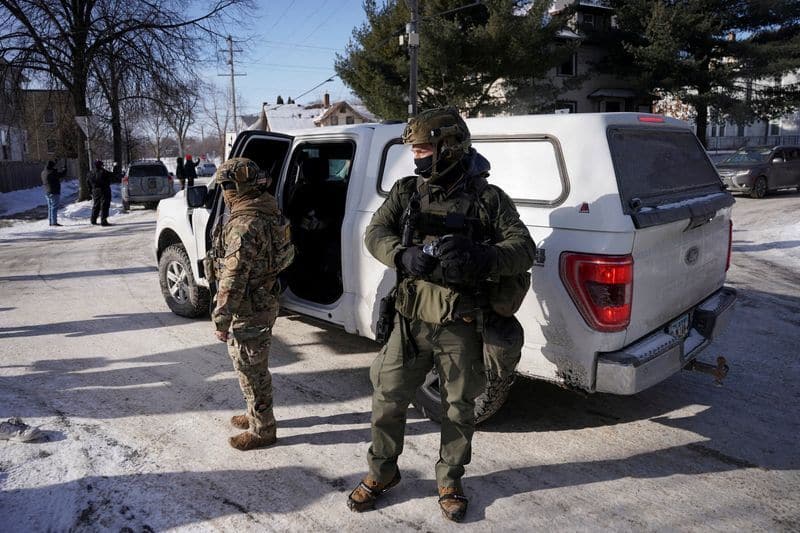
At issue is whether U.S. immigration agents deployed in Trump’s immigration crackdown can wear masks, enter homes without displaying identification or judicial warrants, and conduct indiscriminate sweeps of suspects, rather than the targeted operations they conducted under previous presidents.
Democrats say the reforms are needed to rein in abuses by Immigration and Customs Enforcement and Customs and Border Protection, including killing two U.S. citizens in Minneapolis last month. A January Reuters/Ipsos poll found 58% of Americans thought ICE had gone too far.
Republicans have pointed to possible changes of their own, such as punishments for “sanctuary cities” that do not cooperate with deportation efforts.
Senate Republican Leader John Thune dismissed Democrats’ 10-point proposal as mainly “unrealistic and unserious.”
Democrats hope they will have better luck with Trump, who has sought to de-escalate somewhat.
White House spokeswoman Karoline Leavitt said on Thursday Trump is willing to negotiate, but added that some of the Democrats’ requests were non-starters.
‘YOU ARE NOT SECRET POLICE’
Georgetown University professor Christy Lopez, who worked on police practices for the U.S. Justice Department, said agents have less training and weaker standards than state and local law enforcement.
“These are pretty significant changes in terms of making them more accountable and sending the message … you are not a secret police and allowed to do whatever you want,” she said of Democrats’ proposals.
Democrats and Republicans could find common ground on outfitting agents with body cameras. The DHS funding bill provides $20 million to purchase the equipment, and Trump’s administration is deploying them in Minneapolis, the current focus of the crackdown.
Democrats, however, are pressing for rules mandating access to camera footage and other controls.
Republican Senator Shelley Moore Capito of West Virginia, a member of the Homeland Security panel, said she also supports independent oversight of ICE and CBP activities, as do Democrats.
But she said agents and their families could be at risk if they were required to remove their masks.
“I’ve been doxxed myself. It’s an invasion of your own personal security,” she said.
U.S. law enforcement agencies generally prohibit the use of masks in most circumstances.
Republicans are also resisting Democrats’ demand that DHS officers obtain judicial warrants, rather than more easily obtained administrative warrants, before entering private property.
“We are never going to go along with adding an entirely new layer of judicial warrants because it is unimplementable,” House of Representatives Speaker Mike Johnson said.
However, the two sides might find room for compromise. Republican Representative Michael McCaul of Texas told CBS’ “Face the Nation” on Sunday that the Trump administration might not allow administrative warrants to be used to enter a home, for example.
Many Republicans have not weighed in yet on other Democratic proposals, including banning agents from churches, schools, hospitals and polling places, and prohibiting racial profiling.
(Reporting by Richard Cowan and Nolan D. McCaskill; editing by Andy Sullivan and Rod Nickel)