TOKYO, Feb 6 (Reuters) -
Japan’s first female prime minister, Sanae Takaichi, is seeking to secure her grip on power in a national election on Sunday, with polls suggesting a big win for her conservative party.
Here are some key developments to watch:
WINNING MARGIN
Takaichi’s Liberal Democratic Party and its coalition partner, the Japan Innovation Party, known as Ishin, could capture around 300 seats in the 465-seat lower house of parliament, polls this week showed. That would be a significant jump from the razor-thin majority she now controls.
If the coalition snags 261 seats, dubbed an absolute stable majority, she can control parliamentary committees, easing the passage of legislation, including key budget proposals.
A super-majority of 310 seats would allow her to override the upper house, where her coalition lacks a majority.
If the polls have it all wrong and she loses her lower house majority, Takaichi has said she will resign.
FISCAL JEOPARDY
Takaichi’s election promise to help households cope with rising prices by suspending the 8% sales tax on food sparked a market selloff last month.
Investors baulked at the vagaries of how an economy with the heaviest debt burden in the developed world would pay for the estimated 5 trillion yen ($30 billion) hit to annual revenue.
Her comments on how she will implement those plans will be pored over by those same investors that fled Japanese government bonds and sent the yen sinking into crisis mode.
If she sets off a market rout, Takaichi may not be able to count on the Bank of Japan’s help to tame it, Reuters reported this week.
YOUTH VOTE
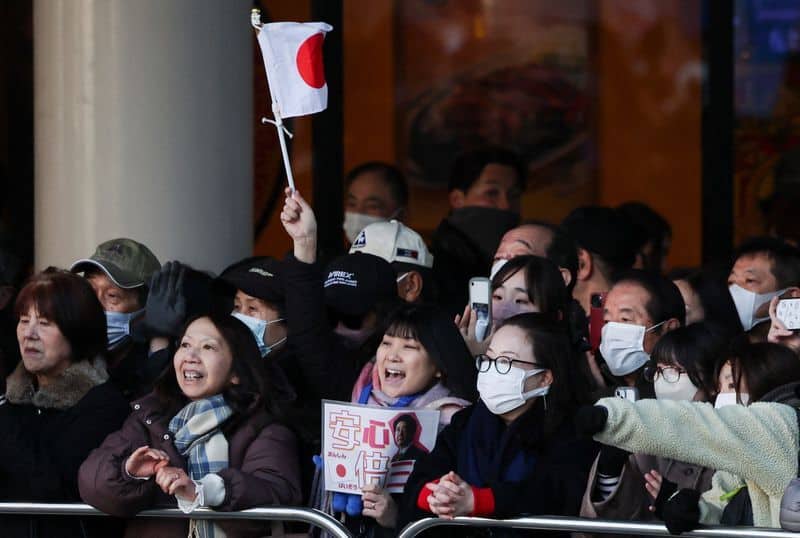
Support for Takaichi, 64, is strongest among younger voters, not the older generations that have long formed the LDP’s electoral backbone, polls show.
Her modest background and nationalistic rhetoric have struck a chord with a disenchanted youth hopeful she can pull Japan out of a decades-long economic funk.
A conservative who draws inspiration from Britain’s Margaret Thatcher, Takaichi has harnessed the power of social media and become an unlikely fashion icon, with fans clamouring to buy the bag she carries and the pink pen she scribbles with.
Whether younger Japanese bother going to polling stations on Sunday may determine the size of her expected win. In the October general election that preceded her rise to prime minister, just 36% of those aged 21 to 24 in the capital Tokyo voted, versus 71% of those aged 70 to 74.
BEEF WITH BEIJING
A resounding victory could hand Takaichi new clout in an escalating dispute with powerful neighbour China, current and former Japanese officials said, though Beijing has shown no signs of backing down.
Weeks after taking office, Takaichi touched off the biggest dispute with China in over a decade by publicly outlining how Tokyo might respond to a Chinese attack on Taiwan.
A strong mandate could also accelerate Takaichi’s plans to bolster Japan’s military, drawing more anger from Beijing, which has cast her endeavours as an attempt to revive Japan’s militaristic past.
FAR-RIGHT RISE
Fielding a record 190 candidates, the far-right Sanseito party could make gains, with polls suggesting it may win around 15 seats, up from just two.
That would build on last year’s upper house election, when the party broke through with fiery warnings about foreigners and attracted notable youth support.
While Sanseito, which has sought ties with U.S. President Donald Trump’s MAGA movement, will remain a small party, its emergence has helped shift the political discourse in Japan to the right, a trend seen in other advanced democracies.
WEATHER WARNINGS
Another factor that could influence turnout is the weather. The election will be the first since 1990 to be held in mid-winter, with some parts of northern and western Japan buried under record snowfall.
More snow is expected on Sunday, with possibly even a rare sprinkling in Tokyo, which could snarl up travel.
Turnout in Japanese elections, which the LDP has dominated in the postwar era, is lower than in most other advanced democracies at around 55% in recent votes.
(Reporting by Tokyo newsroom; Writing by John Geddie; Editing by William Mallard)