By Panu Wongcha-um
BANGKOK, Feb 6 (Reuters) - When Thai Prime Minister Anutin Charnvirakul dissolved parliament on Dec. 12, he did so hoping a surge of nationalism fuelled by last year’s deadly border clashes with Cambodia would help him consolidate power in a general election.
Sunday’s vote will prove whether that gamble pays off.
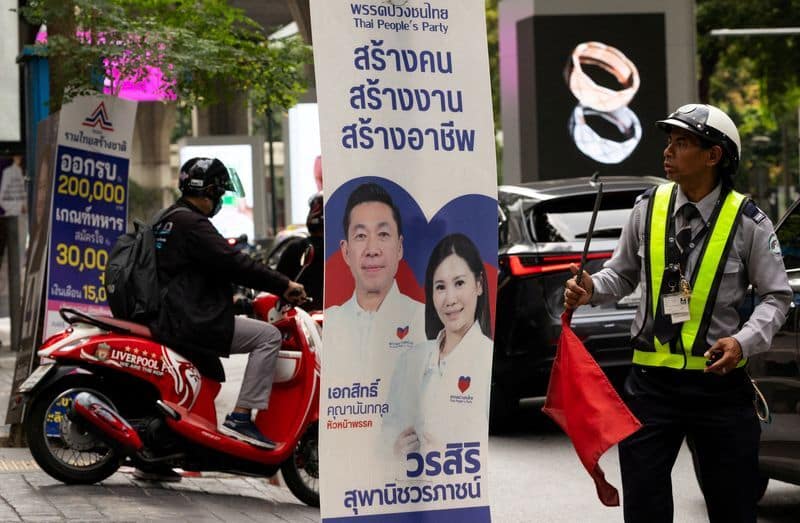
Polls show the electoral contest remains a three-way tussle among Anutin’s ruling Bhumjaithai, the progressive People’s Party and the populist Pheu Thai party.
But the reformist People’s Party and its leader Natthaphong Ruengpanyawut are leading the pack by some margin, with their message of change and reforms cutting through the surging nationalism, although none of the parties are expected to win an outright majority.
That could leave parliament as fractured as when Anutin dissolved the body, citing struggles to run a minority government, amid some of the worst violence along the Thai-Cambodian frontier in decades.
The clashes, which left at least 149 people dead, unleashed a wave of nationalist sentiment that political parties have sought to harness.
In the final stretch before the vote, senior Bhumjaithai figures, including Anutin himself, have ramped up nationalist rhetoric, portraying the election as a choice between those loyal to the nation and those they accuse of being disloyal.
“If Thai people want a prime minister that Cambodia chooses, then vote for those parties,” Anutin told a cheering crowd at a rally in Bangkok’s Lumpini Park last week. “But I am confident that a Bhumjaithai government is for Thai people, 100%.”
ANUTIN TRAILING
In a survey by the National Institute of Development Administration released last Friday, People’s Party leader Natthaphong remained the frontrunner at 29.08%, followed by Anutin in second place at 22.24%.
Another survey by Suan Dusit University published on the same day showed Anutin at third, trailing Pheu Thai’s candidate Yodchanan Wongsawat. Natthaphong held the top spot.
Anutin’s decision to dissolve parliament was driven as much by political survival as by strategy, coming less than 100 days after he took office following the ouster of a coalition government led by Pheu Thai.
“Anutin’s hand was forced because he was running a minority government,” said political scientist Thitinan Pongsudhirak at Bangkok’s Chulalongkorn University.
To take power after Pheu Thai’s collapse, Anutin secured the backing of the People’s Party, which demanded a referendum on constitutional amendment, among other conditions.
PROMISE OF CHANGE
But the deal collapsed in early December after parliamentary disputes and the People’s Party accused Bhumjaithai of reneging on the agreement.
Anutin denied the charge and dissolved parliament, even as fighting raged on with Cambodia, which was only halted in late December after both sides agreed to a truce.
“Although the ceasefire over the Thai-Cambodian border war is still in effect and has dampened the nationalist fervour, Anutin will still rely on nationalism and royalism to retain office,” Thitinan said, referring to the premier’s reverence for the monarchy.
Although its predecessor was blocked from taking power after it won the 2023 election, the People’s Party has been able to sustain its momentum during this campaign, with its progressive stance drawing in those hoping for systemic and deep reforms.
The party has led almost all opinion polls since December, buoyed by detailed policy plans and a revamped team to address criticism that they don’t have enough experience to run a government.
“Why can’t you accept that younger people can be more capable?” asked Kachen Bunlang, a 49-year-old motorcycle taxi driver in Bangkok, who supports the progressive movement.
“Honestly, I want them to come to power.”
(Reporting by Panu Wongcha-um, Napat Wesshasartar and Juarawee Kittisilpa, Editing by Devjyot Ghoshal, Josh Smith and Raju gopalakrishnan)