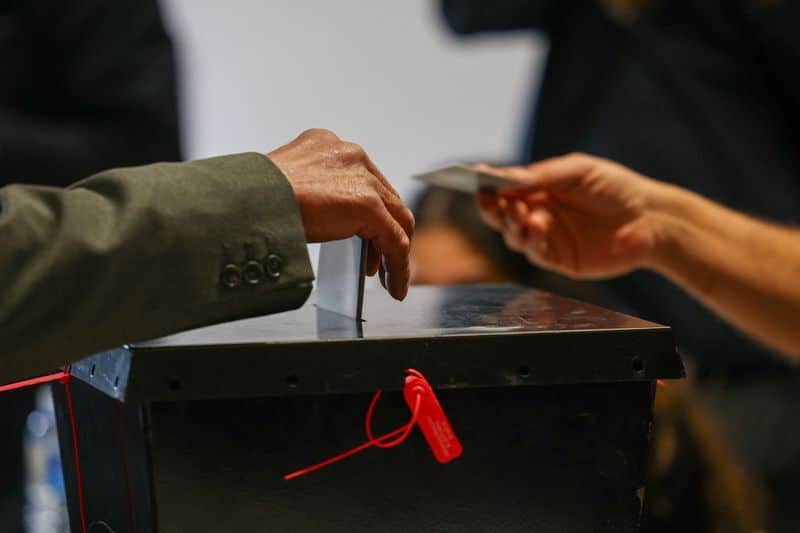
LISBON, Feb 8 (Reuters) - Portugal was voting in a presidential runoff poll on Sunday to choose between leftist Antonio Jose Seguro and far-right contender Andre Ventura, with surveys pointing to a landslide win for Seguro.
A succession of storms in recent days brought heavy downpours and strong gales, forcing three municipal councils in southern and central Portugal to postpone voting by a week, affecting some 37,000 registered voters, or 0.3% of the total.
Partial official results will still be released on Sunday night as usual, starting from 8 p.m. (2000 GMT).
Voters flocked to polling stations on Sunday as rain and wind eased, although numbers were smaller than in the first round, which saw 11 candidates attracting the highest voter participation in 15 years.
LACK OF INTEREST
“I don’t think turnout is lower because of the bad weather. There may actually be fewer votes because many people are not interested. People look at the candidates and don’t really identify with them,” said Lisbon voter Aires Loureiro, 77.
Still, all recent surveys pointed to Seguro getting well in excess of 50% of the vote, about double Ventura’s share. Seguro received backing from prominent conservatives after the first round amid concerns over what many see as Ventura’s populist, undemocratic tendencies.
Portugal’s presidency is a largely ceremonial role but holds some key powers, including the ability to dissolve parliament under certain circumstances. Ventura has said he would be a more “interventionist” president, advocating increased powers for the head of state.
VENTURA’S POLITICAL CLOUT
Roughly two-thirds of those surveyed say they would never vote for Ventura. However, the ballot is expected to further broaden his political clout, reflecting the rise of the far right across Europe.
His anti-establishment, anti-immigration Chega party became the second-largest parliamentary force in last year’s general election, and now Ventura could come close to or even surpass the 31.2% of support won by the ruling centre-right alliance in 2025, according to some projections.
Voting in Lisbon, 35-year-old Rute Trindade said she hoped the election could bring changes for the better, including an improved disaster response after widespread criticism that the government was slow to mitigate the impact of the storms.
“Of course, a president doesn’t have the same power or legislative capacity as a prime minister or parliament, but they can still try to make some difference.”
(Reporting by Michael Gore, Sergio Goncalves and Miguel Pereira; Writing by Andrei Khalip; Editing by David Holmes)