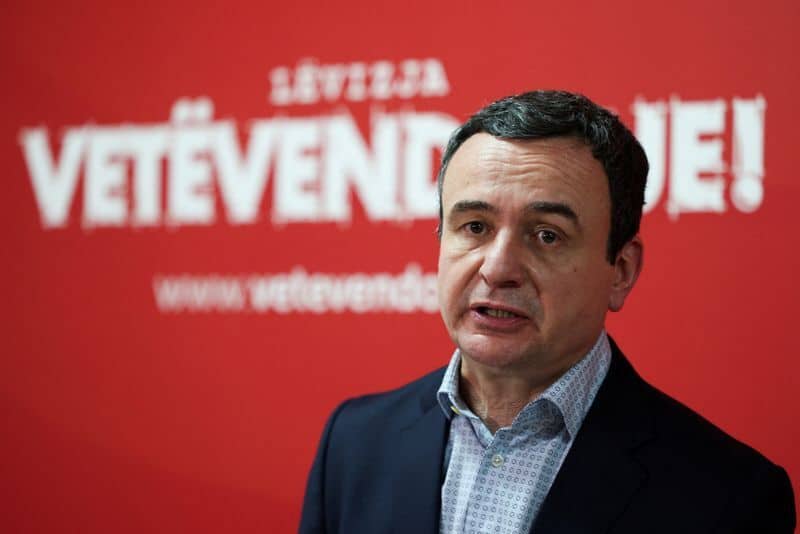
PRISTINA, Feb 11 (Reuters) - Kosovo’s parliament is expected to vote late on Wednesday to endorse a new cabinet led by nationalist Prime Minister Albin Kurti, after more than a year of political deadlock in Europe’s youngest state, officials from Kurti’s party said.
The new government’s most urgent tasks include approving the 2026 budget and securing international loans and aid packages worth hundreds of millions of euros. It will also face major challenges including tensions with Serbia and reforming health and education systems that lag its Balkan neighbours.
Kurti’s Vetevendosje party won 57 seats in the 120-seat parliament in an election in December, and now expects to form a coalition with several small ethnic minority parties.
“Political parties have agreed to hold the constitutive session at 5 p.m. (1500 GMT), and then we will proceed with the vote for the government,” outgoing speaker of the parliament Dimal Basha told media late on Tuesday.
The country of 1.6 million people held a snap election in December 2025 after an inconclusive vote in February.
Kurti, 50, served as prime minister briefly in 2020 before being ousted by a vote of no confidence. He then served as prime minister from 2021 to 2025, and as caretaker for the past year.
Parliament now faces another challenge, electing a new president by March 5 — a process that requires a two-thirds majority. Since Kurti does not have that support, he will need backing from the opposition or risk another snap election.
Kosovo declared independence from Serbia in 2008 with U.S. backing, including a 1999 NATO bombing campaign against Serbian forces trying to crush an uprising by the 90% ethnic Albanian majority.
Despite international support, the country has struggled with poverty, instability and organised crime. While more than 100 countries recognise Kosovo’s statehood, Serbia, Greece, Spain, Russia and many others do not.
(Reporting by Fatos Bytyci; Editing by Alex Richardson)