By Sarah Marsh and Andrew Gray
BERLIN/MUNICH, Feb 13 (Reuters) - One year after U.S. Vice President JD Vance attacked European allies at the Munich Security Conference, Washington’s partners will be seeking to chart a more independent course, while preserving the basis of the alliance.
Vance’s 2025 speech at the annual gathering of top security officials triggered a year of unprecedented transatlantic confrontation, with the United States seemingly set on dismantling much of the international order it helped to build.
This year’s meeting, which begins on Friday, also comes against a backdrop of multiple conflicts, including war in Ukraine, Gaza and Sudan.
“I cannot remember a time when we had more simultaneous wars, crises, and conflicts of that dimension,” Wolfgang Ischinger, the former German diplomat who heads the forum, told a gathering earlier this week.
‘WRECKING-BALL POLITICS’ THREATEN ALLIANCE
Transatlantic ties have long been central to the Munich Security Conference, which began as a Cold War forum for Western defence debate. But the unquestioned assumption of transatlantic cooperation that underpinned it has been upended by what Ischinger called “wrecking-ball politics” in which “sweeping destruction – rather than careful reforms and policy corrections – is the order of the day.”
U.S. President Donald Trump has toppled Venezuela’s leader, threatened other Latin American countries with similar military action, imposed tariffs on friends and foes alike and talked openly about annexing Greenland - a move that could effectively end the NATO alliance.
Last year’s speech by Vance at the conference, accusing European leaders of censoring free speech and failing to control immigration, marked a key milestone in the deterioration of relations.
The Trump administration’s harsh new tone, including a dire warning that Europe faces “civilisational erasure”, has shaken its allies, which have pledged to step up spending on their militaries after decades of neglect.
But Europe’s dependence on U.S. military support will take years to undo, leaving Europe vulnerable as the standoff with Russia over the Ukraine war persists.
“In recent weeks and months, perhaps for the first time in a long while, we have been able to see with our own eyes that we can be a power — especially on the basis of the values we are not willing to abandon,” German Chancellor Friedrich Merz told parliament late last month, referring to Europe’s pushback against Trump over Greenland.
“We have been able to feel something of the happiness that comes from self-respect,” he said, noting, however, the EU would need to do more to assure its own security and economic competitiveness to be able to assert itself.
Vance’s absence this year has led to expectations of a less confrontational tone from Washington.
Secretary of State Marco Rubio is leading the U.S. delegation and is expected to strike a more conciliatory stance in a speech expected on Saturday, Ischinger said.
A RECORD TALLY OF LEADERS
Merz will open the conference on Friday afternoon with a speech expected to seek to shore up transatlantic ties while also emphasizing the need to strengthen the European Union, a German government official said earlier this week.
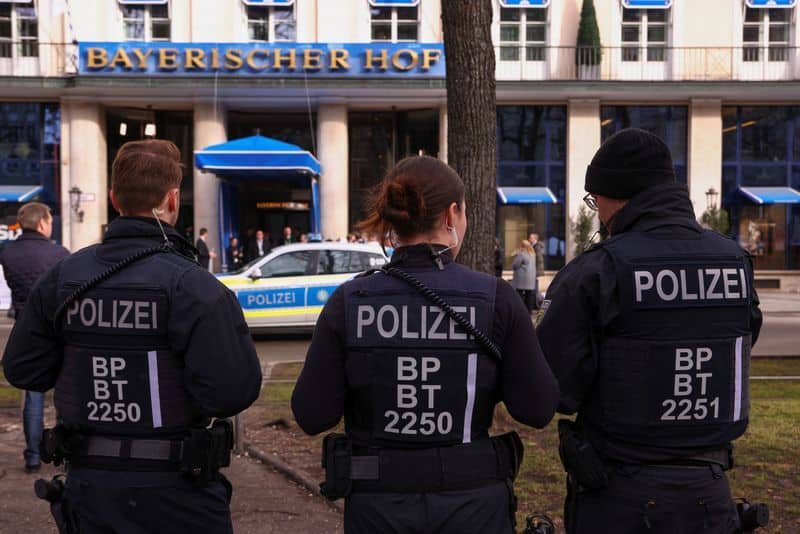
Around 70 heads of state and government and more than 140 ministers, including Chinese Foreign Minister Wang Yi, Ukrainian President Volodymyr Zelenskiy, French President Emmanuel Macron, British Prime Minister Keir Starmer and India’s Foreign Minister Subrahmanyam Jaishankar are expected under tight security in Munich.
Christine Lagarde is due to be the first European Central Bank president to address the event, underlining how efforts to make Europe’s economy more resilient are seen as part of the wider political stakes.
A large delegation from the U.S. Congress had also been expected to accompany Rubio but many pulled out to stay in Washington for a closely watched House vote on funding the Department of Homeland Security.
Russia is not sending a delegation and the forum withdrew invitations to Iranian officials after the Tehran government’s countrywide crackdown on protests last month, in which thousands of people have been reported killed. Instead the son of the last Shah of Iran is expected to give a speech, while a large Iranian opposition rally is seen taking place in town.
After bringing NATO to the brink of implosion over his threats to annex Greenland, Trump appears to have backed off for the moment, after heavy pressure from many of his own supporters, said Claudia Major, senior vice president at the German Marshall Fund overseeing its work on transatlantic security.
She noted, however, that the underlying shift in transatlantic relations had not changed, pointing out that Rubio’s next stops in Europe were Hungary and Slovakia, both run by nationalist leaders who often clash with the EU on key issues such as Ukraine.
But she said the meeting could nonetheless offer European allies an opportunity to press for continued support from Washington for Ukraine, in particular on security guarantees.
“If there were progress on questions like these, then there would also be progress on the overarching issue: are we moving closer to a ceasefire that truly ends the war and does not plant the seeds for the next one?”
(Reporting by Sarah Marsh in Berlin and Andrew Gray in Munich; Additional Reporting by Mark John in London; Editing by James Mackenzie and Sharon Singleton)