ATHENS, March 23 (Reuters) - The long-awaited trial over a train crash that killed 57 people in Greece in 2023 begins on Monday amid protests and strikes against what many see as the state’s role in the incident.
A passenger train carrying students from Athens to the northern city of Thessaloniki collided with a freight train at Tempi in central Greece on February 28, 2023. It was the worst disaster of its kind in Greece and triggered a years-long investigation.
The crash, which caused a fireball and an explosion, shed light on state failings, including corruption, safety deficiencies and years of neglect of the rail network during last decade’s debt crisis.
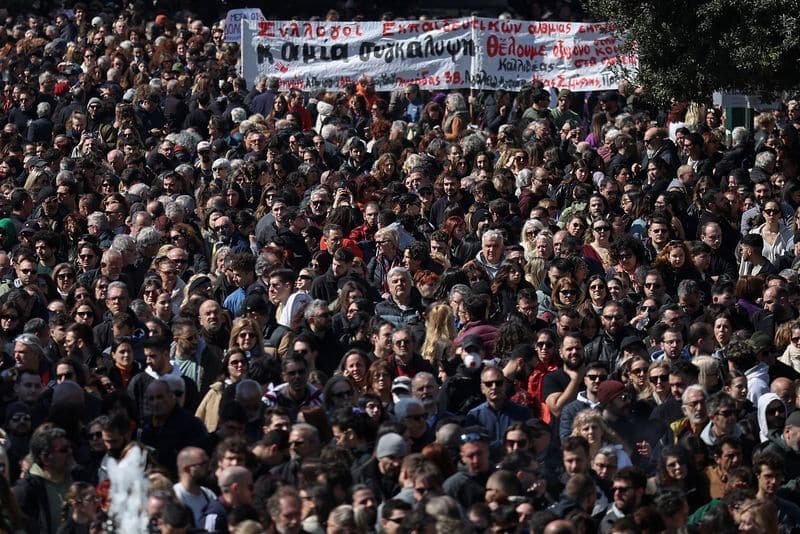
It has led to mass protests across Greece in which demonstrators have demanded political accountability and an end to politicians’ immunity.
On Monday, 36 people, including a station master and rail managers, will stand trial on charges ranging from traffic disruption that led to the deaths to negligent manslaughter and causing bodily harm. No politicians have been tried.
More than 350 witnesses will testify, victims’ relatives, survivors and train workers among them.
Most of the victims died in the crash, but up to seven were killed by the fire, national investigators have said.
Rail services were halted on Monday as Greek train workers staged a symbolic 24-hour strike. People rallied outside the court in the city of Larissa.
Probes have found that a project co-funded by the European Union to install safety systems was launched in 2014 but was years behind schedule in 2023. Relatives have also accused authorities of trying to cover up evidence.
The centre-right government, which denies wrongdoing, has promised justice and pledged full railway reform by 2027.
(Reporting by Renee Maltezou; editing by Edward McAllister and Toby Chopra)