By Sabine Siebold
BERLIN, March 25 (Reuters) - The German army is working to accelerate wartime decision-making through artificial intelligence tools capable of analysing battlefield data more rapidly than humans, drawing lessons from Ukrainian and other forces, its commander told Reuters.
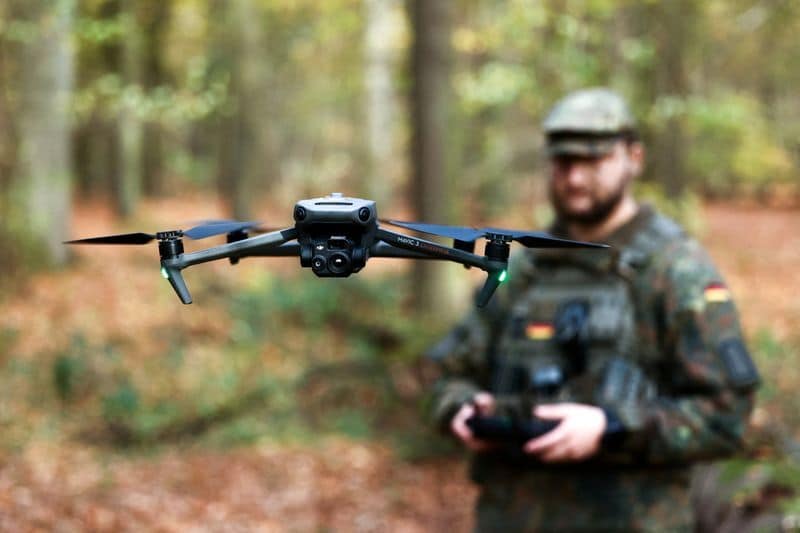
Lieutenant General Christian Freuding, who became army chief last October after years of overseeing Germany’s arms supplies to Kyiv, shared his insights from visits to Ukrainian command posts where drones and modern sensors have drastically increased the volume of battlefield data.
“The Ukrainians exploit data which they have collected over four years of war. Based on this data, the AI can deduce how the enemy has acted in similar situations in the past - and recommend countermeasures,” he said.
He noted that tasks now requiring hundreds of personnel and days to complete could be sped up significantly through AI, adding that conventional methods alone would never be enough to “break the adversary’s decision-making cycle”.
Freuding suggested utilising data from Ukraine and from German military exercises when training analytical tools, ensuring alignment with Germany’s operational principles.
Addressing ethical concerns, he emphasised that AI would serve only as an advisory tool to facilitate human decision-making.
“The task of taking analytical and balanced decisions will always remain with the human, with the soldier,” he said, adding that while a specific AI product is yet to be selected, the technology’s deployment is a priority.
Freuding underscored the importance of aligning Germany’s AI systems with NATO’s evolving standards. He did not rule out a European-developed system, but said American solutions might offer practical advantages due to their advanced deployment.
“Personally, I think it’s important that we get something up and running quickly. Of course, issues like data sovereignty and security need to be taken into account,” he added.
The U.S. army is fielding the AI tool Maven, made by the Silicon Valley company Palantir, to process battlefield data, including imagery and video, to improve situational awareness and speed up decision-making.
(Reporting by Sabine Siebold, editing by Andrei Khalip)