JERUSALEM/BEIRUT, March 26 (Reuters) - Israel has said it will seize a chunk of southern Lebanon to create a “buffer zone” against Hezbollah militants, stoking fears among Lebanese of Israeli military occupation that could deepen instability and stoke further displacement.
WHAT HAS ISRAEL DONE, AND WHAT IS IT PLANNING?
Israel on March 4 ordered all residents south of Lebanon’s Litani River to leave the area, two days after Hezbollah joined the U.S.-Israeli war on Iran by firing rockets at Israel. The river runs east from the Mediterranean about 30 km (19 miles) north of the border with Israel. About 8% of Lebanese territory lies south of the river.
Israeli ground troops have set up new fortifications south of the river and destroyed homes in emptied villages. Israel views the area as a stronghold for the Iran-backed Shi’ite militia, but the south has historically been a diverse region with Christian and Sunni villages as well.
Marking an escalation of Israel’s plans, Defence Minister Israel Katz said on March 24 that Israel had destroyed five bridges over the river and that the military would “control the remaining bridges and the security zone up to the Litani.” He said troops would remain there as long as there is “terrorism and missiles”.
The military’s spokesperson, Effie Defrin, said the same day that the military had defined the Litani River as the “northern security line” and that Israel was “deepening its ground operation with the aim of preventing direct fire at (Israel’s) northern communities.”
Making his first comments on the subject, Prime Minister Benjamin Netanyahu said on March 25 that Israel was “expanding this security strip to keep the threat of anti-tank weapons away from our towns and our territory.”
“We are simply creating a larger buffer zone,” he said.
Israel’s military says it has massed thousands of troops in the border area and that troops have carried out what it describes as limited invasions into Lebanese territory. It has not said when or whether it plans ground activity on a larger scale.
WHAT HAS LEBANON SAID?
Lebanon’s government has not yet made any public comments on Israel’s plans.
Hezbollah said on Tuesday it would fight to prevent Israeli troops occupying the south, calling such a move an “existential threat” to Lebanon.
Hezbollah has fired rockets from locations both north and south of the Litani this month. Its attacks have caused damage and injuries in northern Israel, as well as one death. Three Israeli soldiers have been killed in southern Lebanon since March 2, the military has said, and one woman has been killed in northern Israel by a Hezbollah rocket in that time.
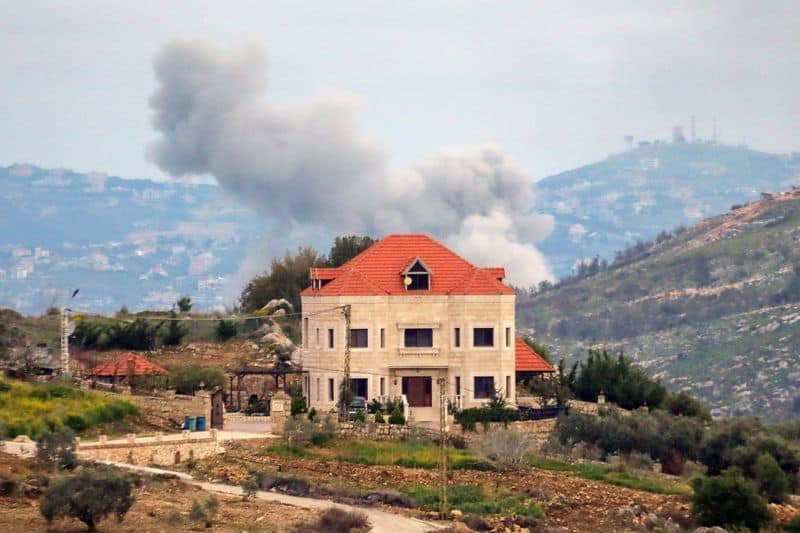
Israel’s troops are clashing with Hezbollah in southern Lebanon and its warplanes have heavily bombed the south, the east and the capital Beirut. More than 1 million people have been displaced and more than 1,000 have been killed, including more than 120 children, 80 women and 40 medics, Lebanon’s health ministry says. It does not otherwise distinguish between civilians and militants.
Shahira Ahmad Dabdoub, a 61-year-old woman displaced by Israeli strikes, is among Lebanese civilians worried that an occupation of south Lebanon could put Beirut within the Israeli military’s reach.
“That’s the fear - if they take the Litani, then they’ll come here next,” she told Reuters in a displacement centre in the capital.
HAS ISRAEL INVADED OR OCCUPIED LEBANON BEFORE?
Israeli troops have invaded south Lebanon in a decades-old cycle.
In 1978, Israel invaded south Lebanon and set up a narrow occupation zone in an operation against Palestinian guerrillas after a militant attack near Tel Aviv. Israel backed a local Christian militia called the South Lebanon Army (SLA).
Four years later, Israel invaded Lebanon all the way to Beirut in an offensive that followed tit-for-tat cross-border fire. It pulled back from central Lebanon in 1983 but retained forces in the south.
In 1985, Israel established a wider occupation zone in southern Lebanon, about 15 km deep, controlling the area with the SLA.
Israel withdrew from southern Lebanon in 2000, after continued attacks on Israeli military positions in occupied Lebanese territory by Hezbollah, ending 22 years of occupation.
In 2006, Hezbollah crossed the border into Israel, kidnapping two Israeli soldiers and killing others, leading to a five-week war involving heavy Israeli strikes on both Hezbollah strongholds and national infrastructure.
On October 8, 2023, Hezbollah opened fire at Israel, one day after the Hamas-led attacks on southern Israel that killed 1,200 people in Israel and led to war in Gaza, pitting Israeli forces against the Palestinian militant group. Israel responded to Hezbollah with a bombing campaign and eventually sent its ground troops into southern Lebanon again. After a 2024 ceasefire, Israel kept troops on five hilltops in southern Lebanon.
DOES ISRAEL KEEP BUFFER ZONES ELSEWHERE?
In the war in Gaza, Israel razed swaths of the enclave along its border with Israel to create a zone it says is meant to defend Israeli civilians living nearby.
Israeli attacks have killed over 71,000 Palestinians in the war in Gaza, most of them civilians, according to Gaza health authorities.
Israeli leaders accuse Hezbollah of planning its own incursions for years. In May 2023, Hezbollah invited media to watch its elite Radwan fighters simulate an invasion of Israel.
Defence Minister Katz said Israel was working in Lebanon according to the “Rafah and Beit Hanoun model”, referring to two towns in Gaza that Israeli forces have nearly completely destroyed and depopulated.
Israeli troops also seized the strategic Mount Hermon summit in southern Syria after the fall of then-President Bashar al-Assad in Syria in late 2024. Israel has demanded Syria’s new leaders create a demilitarized zone stretching from Damascus to the Hermon and has launched numerous raids in southern Syria.
(Reporting by Maayan Lubell in Jerusalem and Maya Gebeily in Beirut; Additional reporting by Emilie Madi in Beirut; Editing by Rami Ayyub and Timothy Heritage)