By Samia Nakhoul and Maayan Lubell
DUBAI, April 14 (Reuters) - The Iran war was meant to deliver a defining victory over Tehran that would secure Israeli Prime Minister Benjamin Netanyahu’s place in history. More than six weeks into the conflict, he has been unable to translate military might into political gain.
Despite Israel’s overwhelming firepower, its enemies across every front have been weakened but not neutralised. Even after heavy Israeli-U.S. airstrikes and the loss of senior leaders, Iran remains intact and defiant.
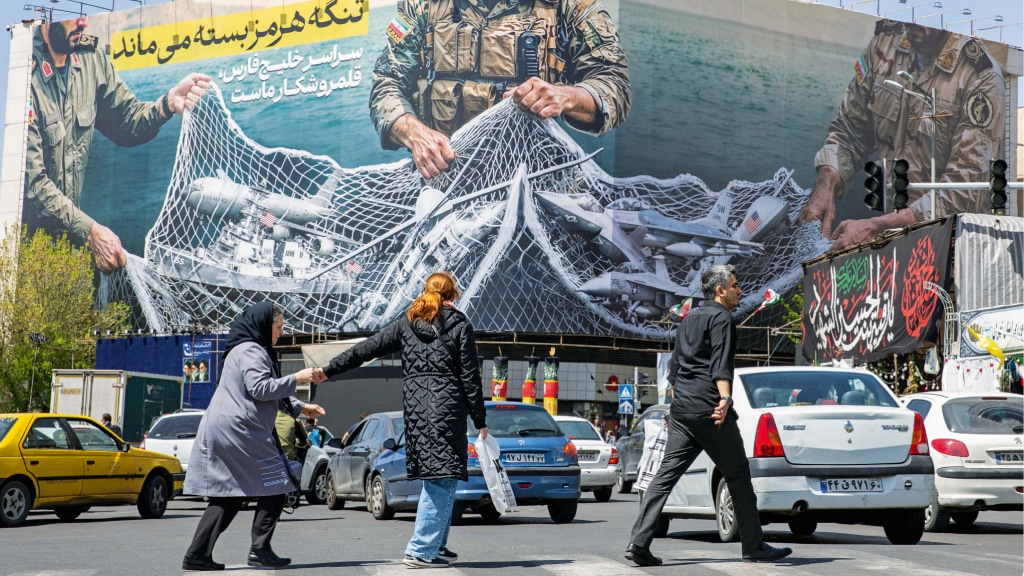
Tehran’s nuclear stockpiles endure, its missile capability is now proven and it holds sway over the Strait of Hormuz, the artery for a fifth of global oil flows.
Palestinian Islamist militant group Hamas has not been disarmed or dismantled in Gaza, and Iran-backed Hezbollah continues to fire rockets at northern Israel from Lebanon.
“Netanyahu is not winning,” said Danny Citrinowicz, a senior researcher on Iran at Israel’s Institute for National Security Studies. “This war is a strategic failure. There is a gap between what he promised at the start of the campaign and where we ended up.”
NETANYAHU’S APPROVAL RATINGS FALL
Netanyahu, 76, is paying a political price for a military campaign launched with U.S. President Donald Trump that has failed to deliver a decisive outcome, political analysts in the region say.
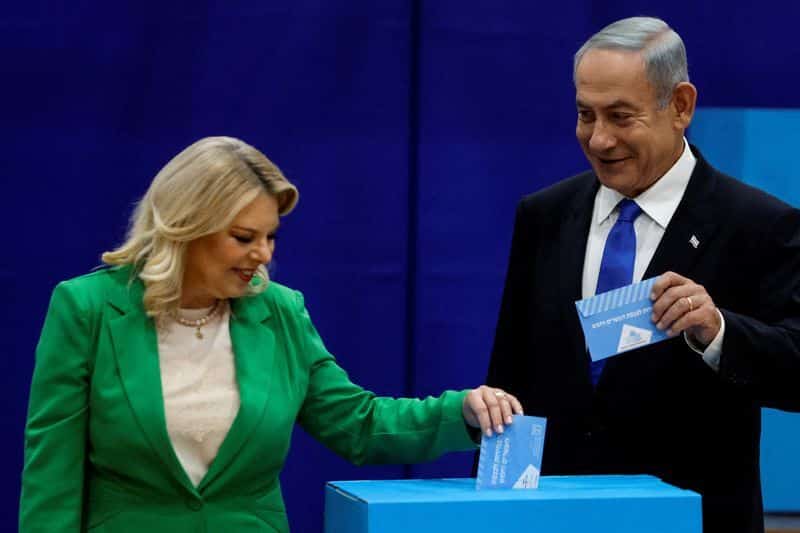
Netanyahu’s approval ratings have slipped and, with legislative elections due by late October, the political risks he faces are rising.
Netanyahu’s office did not respond to a Reuters request for comment for this article. The prime minister has criticised those who he said were diminishing Israel’s achievements in Iran, saying Israel has emerged stronger and Iran weaker.
“There are massive achievements here. This is a historic change. We crushed the nuclear program. We crushed the missiles. We crushed the regime,” he said in a statement on Saturday.
At the start of the war, Netanyahu told Iranians they would be “called upon to take to the streets” and topple their clerical rulers. Security officials have since grown increasingly skeptical such an outcome will materialise any time soon, a senior Israeli military official said.
Two Israeli officials told Reuters the initial expectation had been for a swift operation to “finish the job” in three weeks. The war has instead expanded into a wider confrontation with regional and global implications.
SUPERIOR AIRPOWER
Aviv Bushinsky, a former Netanyahu adviser, said the war on Iran had initially restored Netanyahu’s standing, which had been damaged by the Hamas attack on Israel on October 7, 2023, that led to the Gaza war.
In the early stages of the Iran war, his hardline posture towards Hamas and Hezbollah resonated with parts of the Israeli public, but polls show his ratings have slipped since then.
An April 11 survey by Hebrew University’s Agam Labs found only 10% of Israelis viewed the war as successful, while support for Netanyahu was at 34%, down from 40% at the start of the war. More than half rated his leadership as poor or very poor.
Political analysts in the region say that although the military campaign built almost entirely on airpower has been tactically impressive and produced operational gains, it has not compounded into a coherent and durable strategic endgame.
“There is this idea that F-15s and F-35s (fighter jets) can shape or remake the Middle East - that if you kill enough Iranian leaders, the regime will fall,” said Citrinowicz. “It’s a flawed assumption, and the cost of it keeps getting higher every time.”
Bushinsky also questioned the value of Israel’s reliance on targeted assassinations although Iranian Supreme Leader Ali Khamenei was among those killed in such strikes.
“There is always someone who replaces them,” Bushinsky said. “It wakes the bear, it doesn’t kill it.”
Israeli officials and a Western source said Netanyahu had been informed of a ceasefire plan that was agreed last week only when it was in its final stages. The Western source said Netanyahu had been angered by being left out of the process.
The prime minister has sought since then to counter any perception that he was sidelined in the Pakistan-brokered talks, and on Tuesday issued a statement saying U.S. Vice President JD Vance had called him from his plane to brief him on the talks.
Netanyahu has also launched a campaign to convince voters the war has been worth the cost.
The war effort has run up about $11.5 billion in budgetary costs, with a large share spent on defence, Israel’s finance ministry said on Sunday.
GENIE OUT OF THE BOTTLE
Netanyahu’s dilemma, diplomats in the region say, is likely to deepen in the absence of decisive military victories, with security problems remaining for Israel in Gaza and the Israel-occupied West Bank, and the conflict with Lebanon continuing.
Netanyahu could seek to block any immediate diplomatic breakthrough in the war with Iran, calculating that a U.S.–Iran agreement would exacerbate his political troubles, regional diplomats say.
Netanyahu’s office did not immediately respond when asked for comment on this assertion.
Israel has said it would accept a deal that curbs Iran’s missile and nuclear programmes and removes enriched uranium.
The war has crossed a critical threshold for Washington, experts on Iran say, with Iran realising it can survive a conflict with the U.S. and threaten its enemy by attacking Gulf infrastructure and controlling the Strait of Hormuz.
“You can’t put the genie back in the bottle,” Citrinowicz said of Iran’s control of the strait. “The Iranians feel strengthened now, they feel emboldened and they want much more than they were offered in previous talks.”
The biggest losers, said Aaron David Miller, a former U.S. Middle East negotiator, are the Gulf Arab states. The region, he said, faces the prospect of dealing with a more bitter, harder-line Iranian leadership.
Abdulaziz Sager, chairman of the Saudi‑based Gulf Research Center, said Gulf states would accept the risks of heightened confrontation with Iran if necessary to keep the strait open, rather than allow Tehran to threaten shipping or Gulf ports.
(Additional reporting by Emily Rose in Tel Aviv, Writing by Samia Nakhoul, Editing by Timothy Heritage)