By Anita Komuves
DEBRECEN, Hungary, March 16 (Reuters) - Istvan Hollo, a 76-year-old supporter of Hungarian Prime Minister Viktor Orban, spends up to an hour daily on Facebook promoting the right-wing leader’s messages to bolster his chances in an April 12 parliamentary election.
In early March, Orban launched a “40-day digital challenge”, urging his grassroots supporters to spend at least 10 minutes daily sharing posts and comments on social media, as he seeks to counter the strong online presence of his rival Peter Magyar of the centre-right Tisza party, which leads in opinion polls.
Orban’s bid to mobilise online support for his nationalist Fidesz party from its predominantly ageing demographic comes after platforms such as Meta and Google halted political advertising last October due to new Europe-wide restrictions on such paid ads, which had been Fidesz’s mainstay.
Wearing an orange Fidesz cap and a paper mask of Orban’s ally U.S. President Donald Trump, Hollo said the election “will be decided on Facebook” - by far the most popular online platform in Hungary.
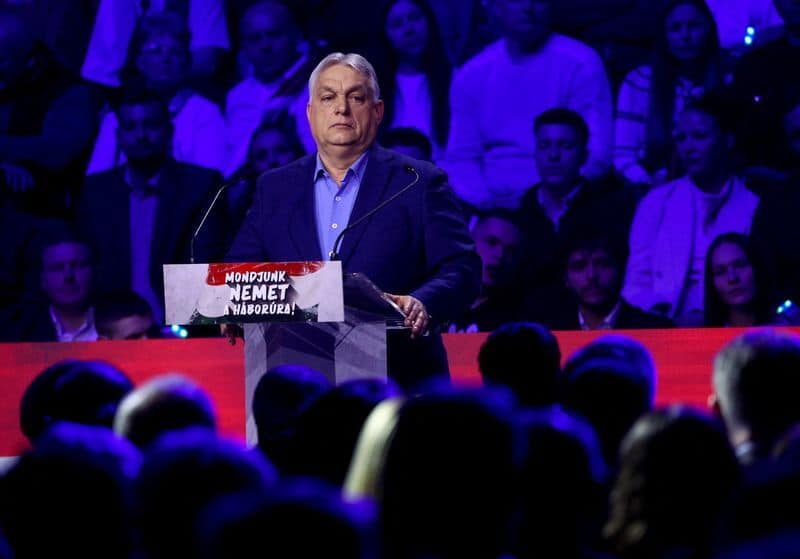
“Our opponent is Tisza and they are more active on Facebook, so all of us alive and kicking must hit the keyboard hard,” Hollo told Reuters during a campaign rally at a stadium in the eastern city of Debrecen.
In the April 12 vote, Orban faces the biggest challenge yet to his 16-year rule, although opinion polls show many voters still undecided, making the outcome uncertain.
“DIGITAL FIGHTERS”
Orban’s government had dominated the digital sphere for years by spending millions of dollars on advertising, but the EU law has forced Fidesz to change tactics. It requires Big Tech companies to clearly label political advertising, indicating who paid for it and how much, or risk hefty fines.
It now resorts to the help of “digital fighters”, as its leaders call grassroots activists who have received training at party events on how to most effectively post and comment on Facebook, and of wider “digital civic circles” of supporters who hang out in online chats.
Fidesz has also enlisted the help of right-wing influencers and used artificial intelligence tools to create campaign videos and deepfakes attempting to discredit its opponent.
Peter Kreko, director of the think-tank Political Capital, said the ban had forced Fidesz, which was the biggest campaign spender on Google’s platforms in Europe before the 2024 European elections, to become more creative.
“The carpet bombing approach no longer works, they cannot push their messages on everyone’s screens in paid advertising,” Kreko said, adding that Hungary could become a test lab for how European campaigns adapt to the political advertising ban.
Whether the tactic will pay off remains to be seen.
Observers say Magyar’s less official approach, where he personally writes posts and comments, has allowed him to successfully reach voters, particularly younger ones.
A February tally by news site Telex showed 179 Facebook posts by Magyar, who has 833,000 followers, received 9.6 million reactions, while Orban’s 278 posts gathered 5.2 million reactions, even though he has more followers - 1.5 million.
Last month’s survey by pollster Median also showed 67% of those under 30 support Magyar’s Tisza and just 8% back Fidesz.
The rally in Debrecen brought together mostly older supporters, some of whom said they were actively sharing Fidesz content online, while still underscoring the value of door-to-door campaigning.
“Facebook is a world that cannot be avoided. But people also expect us to visit them,” said longtime Fidesz backer Imre Simon, 72.
(Reporting by Anita Komuves, editing by Andrei Khalip)