By Phil Stewart
WASHINGTON, March 31 (Reuters) - Defense Secretary Pete Hegseth declined on Tuesday to reaffirm the U.S. commitment to NATO’s collective defense, saying that would be up to President Donald Trump after European allies had failed to stand with the United States in the war against Iran.
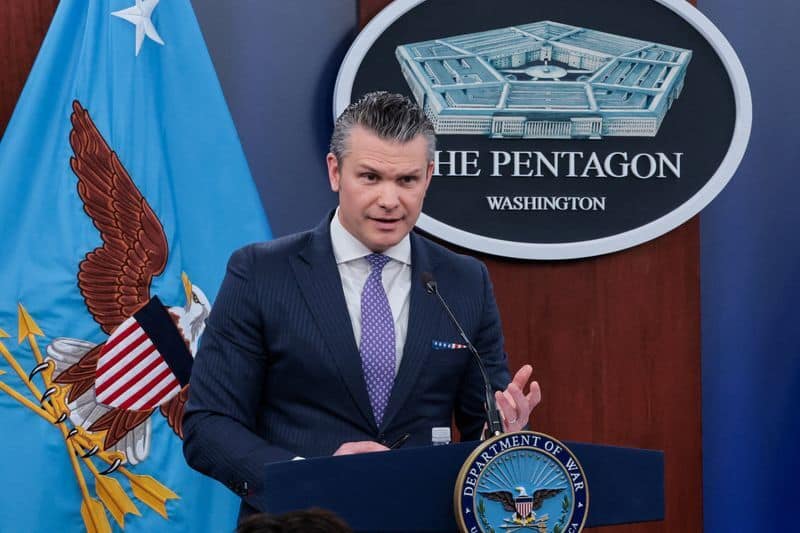
The remarks by Hegseth at a Pentagon briefing were extraordinary, given that collective defense lies at the heart of the NATO alliance, which was formed in 1949 with the primary aim of countering the risk of Soviet attack on allied territory.
Any signal by the United States that it might not be willing to defend NATO allies in the event of attack by Russia or another adversary could severely weaken the alliance even if Trump opts against withdrawing from it altogether, something that may require consent by Congress.
Experts have long warned that such remarks could also encourage Russia to test NATO members’ readiness to enforce the alliance’s Article 5, which states an armed attack against one member state is an attack on all.
Asked by Reuters at a news briefing if the United States is still committed to NATO’s collective defense, Hegseth said: “As far as NATO is concerned, that’s a decision that will be left to the president. But I’ll just say a lot has been laid bare.”
Hegseth then appeared to point to Trump’s latest remarks on social media blasting France for failing to allow overflight of U.S. military resupply aircraft headed to Israel and criticizing Britain for failing to launch the war against Iran alongside the U.S. and Israel.
Trump said on Friday the United States does not “have to be there for NATO.”
“You don’t have much of an alliance if you have countries that are not willing to stand with you when you need them. He’s simply pointing that out, and ultimately, it’ll be his decision of what that looks like,” Hegseth said.
(Reporting by Phil Stewart; Editing by Alistair Bell)