By Anett Rios and Alien Fernandez
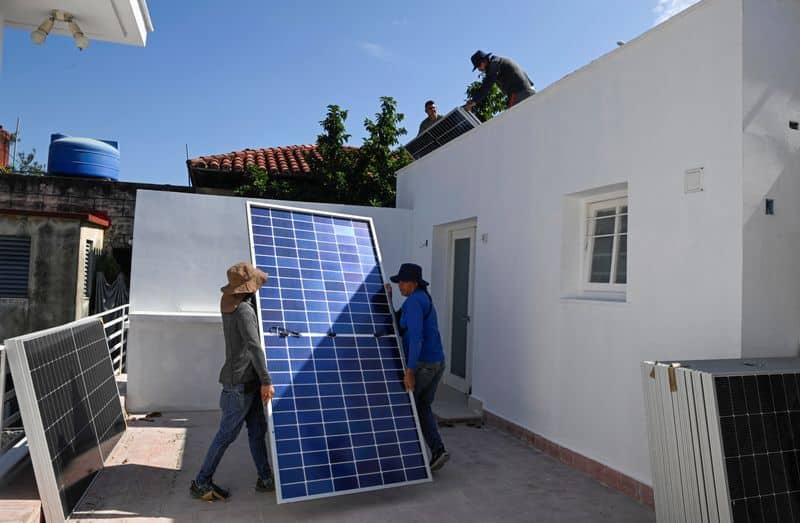
HAVANA, Feb 20 (Reuters) - Cubans are scrambling to install solar panels on their homes, shops and vehicles to combat extended blackouts as Washington prevents oil shipments from reaching the Caribbean’s largest island, contributing to electricity generation shortfalls.
U.S. sanctions and a deep economic crisis have for years made it impossible for the government to buy enough fuel, and a more recent drought in shipments from Venezuela and Mexico due to U.S. tariff threats has worsened existing shortages.
CHINA HELPS TO FINANCE SOLAR GROWTH
Cuba’s government, helped by Chinese financing and equipment donations, has installed upwards of 1,000 megawatts of solar generation in the past year, and promises to double that capacity in the coming years. But some private citizens have taken matters into their own hands.
“Given the frequent outages, which pretty much stop you from doing anything, a friend offered to help me invest in panels and set everything up,” Havana resident Roberto Sarriga told Reuters.
Sarriga said that with the help of solar panels he could have internet, charge his phone so people can locate him and power a TV to keep his elderly mother entertained watching her favorite soap operas.
“The idea was to at least have the basics covered.”
The panels, imported and sold in dollars, are well out of reach of most Cubans, but have offered a solution for a growing class of private business owners and those who still receive money from relatives abroad.
The government, aiming to encourage such investments, late on Thursday announced new measures that would waive personal taxes for up to eight years for business people who undertake renewable energy projects.
DEMAND INCREASING AS FUEL RUNS SHORT
Solar panel installer Raydel Cano, who works in homes and private businesses throughout the Cuban capital Havana, told Reuters demand had increased as fuel has run short in the past few weeks, leaving those with gas and diesel-driven generators in the lurch.
“Private businesses see themselves obligated to install panels,” he said, noting that alternatives to fully renewable power had mostly become obsolete as the grid falters.
Though installing solar panels demands a higher cost upfront, Havana cafe manager Dariem Soto-Navarro said with diesel increasingly difficult to buy, solar was the better option.
“In addition to being clean, green energy, it optimises operating costs,” he said. “It is without a doubt one of the best solutions for entrepreneurs and private businesses.”
Alejandro Arritola, who drives a tricycle-taxi with solar panels installed on the roof, told Reuters he had installed the panels to help him travel further when he runs out of gas.
“It extends my range and I don’t have to use any gasoline,” he said, noting that his family continues to get around with ease despite the shortages. “If there’s no public transportation, it doesn’t matter.”
The Trump administration says its measures increase pressure for political change in Cuba. On Wednesday, White House press secretary Karoline Leavitt said it was in Cuba’s “best interest to make very dramatic changes very soon.”
The U.N. has warned that if Cuba’s energy needs are not met this could cause a humanitarian crisis. The island, already suffering from severe shortages of food, fuel and medicine, has implemented rationing measures to protect essential services.
Russia, one of Cuba’s last remaining oil suppliers, is preparing to send crude in the near future, Izvestia newspaper reported last week, without providing a specific date.
(Reporting by Anett Rios, Alien Fernandez and Norlys Perez; Writing by Sarah Morland; Editing by Dave Sherwood and Sharon Singleton)