By Bart H. Meijer and Charlotte Van Campenhout
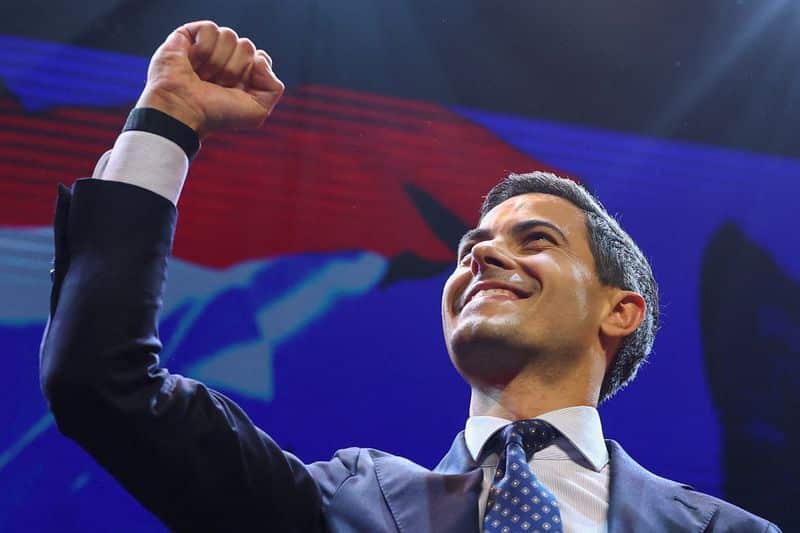
THE HAGUE, Feb 23 (Reuters) - Rob Jetten became the youngest prime minister in Dutch history on Monday when his minority government was formally confirmed in power by King Willem-Alexander.
Jetten, 38, propelled his progressive, pro-EU D66 party to a surprising election victory last October in a polished and optimistic campaign, promising a break from the divisive previous government dominated by nationalist Geert Wilders.
His optimism will be put to the test from the start, as his centre-right coalition lacks a majority in the Netherlands’ lower and upper houses of parliament and will need opposition support for all its proposals.
The coalition of D66, the conservative Christian Democrats and right-wing VVD marks a rare experiment in the euro zone’s fifth-largest economy, traditionally governed by majority coalitions with detailed government pacts.
But securing a majority has become increasingly difficult in the fractured Dutch political landscape, as voter preferences change in every cycle and centrist parties have steadily lost support.
UPHILL BATTLE
In a clear sign of the uphill battle Jetten faces, opposition parties from the left to the right have denounced the coalition’s plans to fund a historic increase in defence spending through cuts in welfare and healthcare.
Left-wing opposition leader Jesse Klaver last Friday said the plans were “unfair”, after independent calculations had shown they would disproportionately hurt people on lower incomes.
“Ordinary people will pay hundreds of euros more, while nothing extra is asked of the richest,” he said in a post on social media platform X. “This has to change.”
Wilders has said he will oppose any initiative by Jetten’s government, while a range of smaller parties have all voiced concerns about the plans that have been presented so far.
The coalition has vowed to increase defence spending to the new NATO target of 3.5% of GDP by 2035, up from about 2% today, through a “freedom tax”, in the form of a surcharge in income taxes.
The coalition aims to limit unemployment benefits, to hike people’s own contributions to healthcare and to accelerate the increase of the retirement age in step with rising life expectancy.
The coalition has also promised a strict approach to asylum migration, a topic that has split Dutch politics for years and has led to the downfall of the previous two governments.
DOWNPLAYING DISADVANTAGE
Jetten has tried to downplay the disadvantage of only holding 66 of the 150 lower-house seats, calling it an opportunity for better cooperation in parliament, after the Wilders-era of political infighting without progress on any policy issue.
In the days before his government’s installation, he said there was still room to adjust plans.
“We see that everybody pays a price, but that it’s not spread totally evenly,” he said.
“We can take time in the coming months to improve the plans, before we draft our final budget.”
YESILGOZ ON DEFENCE
Overseeing the surge in spending will be new Defence minister Dilan Yesilgoz, who took over the lead of the VVD party in 2023 from Mark Rutte, the Netherlands’ longest serving prime minister and current chief of NATO.
Former member of European Parliament Tom Berendsen is the new Foreign minister, while Eelco Heinen stayed on at Finance.
(Reporting by Charlotte Van Campenhout and Bart MeijerEditing by Gareth Jones)