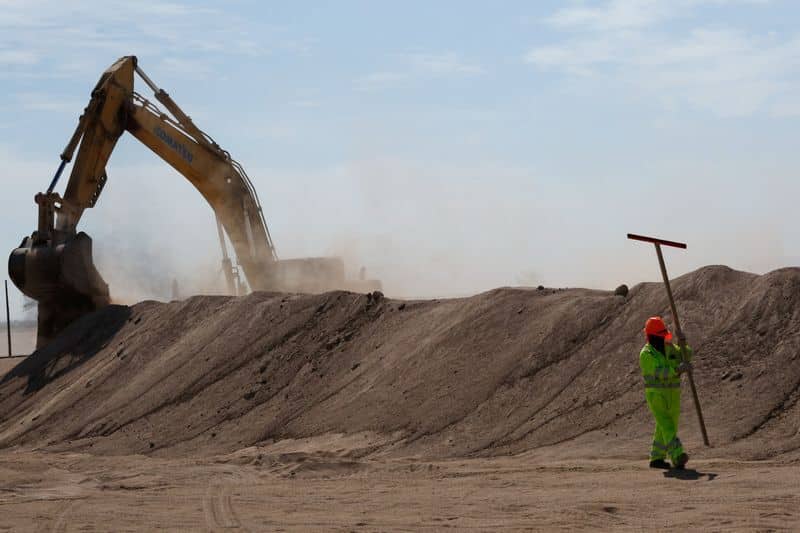
SANTIAGO, March 17 (Reuters) - Chile’s new right-wing government has begun deploying heavy machinery to dig trenches along its northern border with Peru, moving to deliver on President Jose Antonio Kast’s campaign pledge to crack down on illegal migration and increase military presence at the border.
Kast, who took office last week, had promised during the campaign to install physical barriers at key border crossing points to stem unauthorized entries. On Monday, he inspected the start of the construction near the Chacalluta border post, where he said the measures were aimed at restoring state control.
“We want to use backhoe (trucks) to build a sovereign Chile that has been violated by illegal immigration, drug trafficking, and organized crime,” Kast while inspecting the start of the works.
The president climbed onto one of the excavators during the visit and greeted military personnel stationed in the area.
Kast has said he intends to lead an “emergency government” focused on stabilizing public finances and tackling drug trafficking. Since taking office, he has issued several decrees tightening security along Chile’s northern frontier.
Irregular crossings had brought more than 180,000 people into Chile in recent years, Kast said, arguing the new barriers were necessary to halt the flow.
Chile is widely considered one of Latin America’s safest countries, according to U.N. data, though a rise in organized crime in recent years led to a wave of insecurity and an increase in homicides.
Human rights advocates and migrant groups have raised concerns about the government’s hardline immigration agenda could endanger migrants.
“Migration policies must consider not only security but also fundamental principles such as due process, family unity, the best interests of the child, and respect for international human rights treaties,” said Osvaldo Llinás Quintero, director Chile’s Observatory of Migration Governance and Human Rights in an Instagram post.
(Writing by Natalia Siniawski; Reporting by Fabian Cambero; editing by Cassandra Garrison and Aurora Ellis)