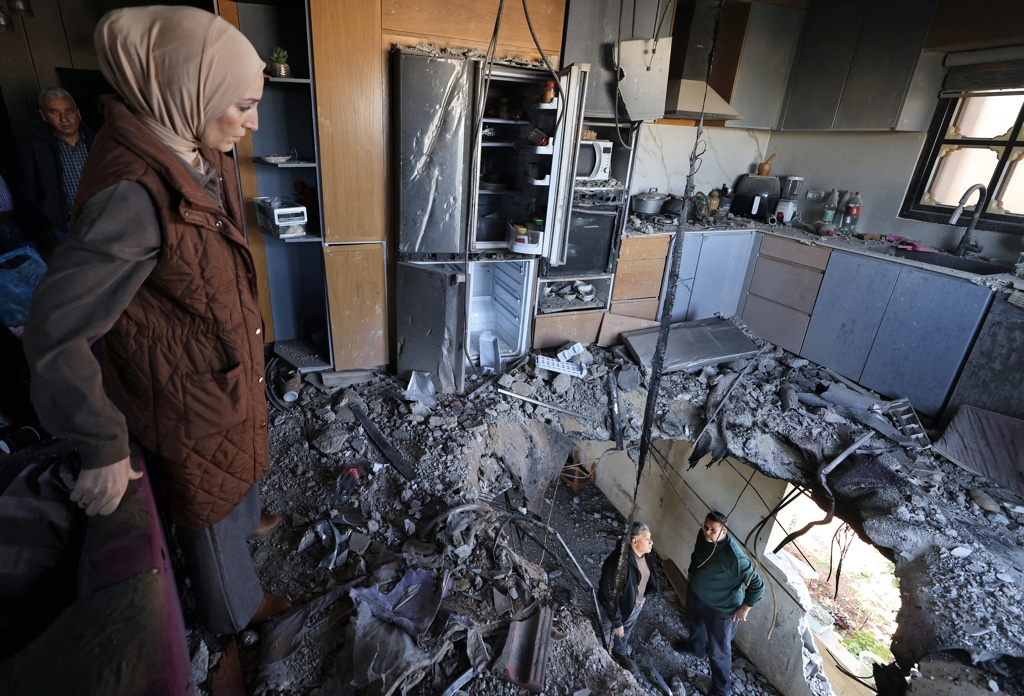
March 19 (Reuters) - The U.S.-Israeli war on Iran and Tehran’s attacks on Gulf neighbours have damaged major energy facilities and brought shipping through the Strait of Hormuz - which handles about 20% of global oil and liquefied natural gas flows - close to a halt.
With daily oil exports from the region down at least 60% from pre-war levels, tensions escalated on Wednesday when Israel struck Iran’s South Pars gas field and Tehran retaliated with attacks on regional energy infrastructure.
Here are key energy disruptions so far:
IRAN
• Parts of Iran’s South Pars gas field and the Asaluyeh processing hub were attacked on March 18, though the extent of the damage remains unclear, state media said.
• Iran halted natural gas flows to Iraq after diverting supply for domestic use, a senior Iraqi official told Reuters.
• Israel has previously struck fuel depots across mainland Iran, while the United States hit its military targets at Kharg Island, Iran’s main oil export terminal.
SAUDI ARABIA
• A drone struck the SAMREF refinery - owned by Aramco and Exxon - on March 19, with damage under assessment, the Saudi defence ministry said.
• Saudi Arabia, the world’s top oil exporter, cut output by about 2 million barrels per day to roughly 8 million bpd after reducing production at two offshore fields.
• The kingdom also suspended operations at its 550,000-bpd Ras Tanura refinery and rerouted some crude exports to the Red Sea.
• Saudi air defences intercepted a ballistic missile aimed at Yanbu, now the country’s only crude export outlet. Loadings there were briefly halted.
KUWAIT
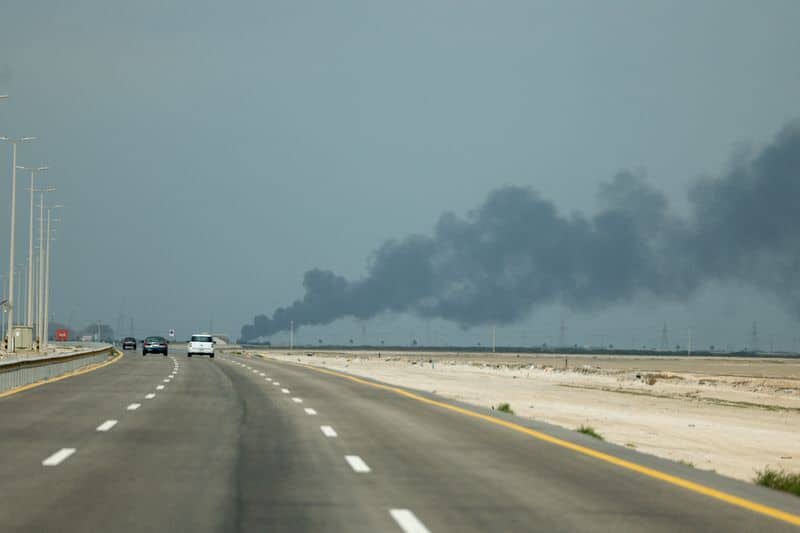
• Drone attacks on March 19 hit operational units at Kuwait Petroleum Corporation’s Mina al-Ahmadi and Mina Abdullah refineries, triggering fires at both sites.
• Kuwait had already cut oil output and declared force majeure.
QATAR
• Missile strikes early on March 19 damaged multiple QatarEnergy LNG facilities, accounting for 17% of its export capacity.
• Shell said production at its Pearl gas-to-liquids plant at Ras Laffan was halted after sustaining damage.
• Qatar had already suspended LNG operations on March 2 and declared force majeure on LNG shipments on March 4, disrupting supplies equivalent to about 20% of global LNG trade.
UNITED ARAB EMIRATES
• The Habshan gas processing complex, one of the world’s largest with capacity of 6.1 billion standard cubic feet per day, was shut on March 19 after debris from intercepted missiles caused incidents.
• The Bab oil field was also targeted.
• Oil output by the UAE, OPEC’s third-largest producer, more than halved. ADNOC shut the 922,000-bpd Ruwais refinery, while the Fujairah export terminal came under repeated attacks.
• TotalEnergies said on March 12 it had lost 15% of its Middle East upstream production, including offshore the UAE.
IRAQ
• Iraq, OPEC’s second-largest producer, cut output from its main southern oilfields by 70% to about 1.3 million bpd from 4.3 million.
• Baghdad struck a deal on Tuesday to resume crude exports from northern Kirkuk fields via pipeline to Turkey.
BAHRAIN
• Bahrain’s Bapco Energies declared force majeure on March 9 after an attack on its 380,000-bpd Sitra refinery.
SHIPPING
• Shipping through the Strait of Hormuz has nearly stopped since Iran declared it closed on March 2 and warned it would fire on vessels attempting to transit.
• More than a dozen ships have been struck since the war began, though some carrying fuel to India and Pakistan were allowed through.
• U.S. President Donald Trump has said the U.S. Navy could escort tankers, but the Navy has so far declined industry requests.
• Major marine insurers are cancelling war-risk cover for vessels operating in Iranian, Gulf and nearby waters.
• Some vessels are struggling to refuel at Asian ports as bunker fuel costs surge.
IMPACT ON CONSUMERS
• Middle East crude benchmarks surged to record highs.
• U.S. diesel prices topped $5 a gallon for only the second time on record, while gasoline climbed above $3.70 a gallon, the highest since October 2023.
• Asian refiners, including in Japan, cut runs or declared force majeure amid shortages of feedstocks such as naphtha.
• China has banned exports of gasoline, diesel and aviation fuel.
• India urged consumers to conserve energy and avoid panic buying.
• South Korea capped domestic fuel prices for the first time in 30 years and restricted naphtha exports.
• The International Energy Agency recommended releasing 400 million barrels from global reserves - the largest such step in its history.
• Washington temporarily relaxed sanctions on Russian crude.
(Reporting by Ahmad Ghaddar and Stephanie Kelly in London, Nerijus Adomaitis in Oslo; Editing by Rod Nickel, Aidan Lewis)