By Daria Sito-Sucic
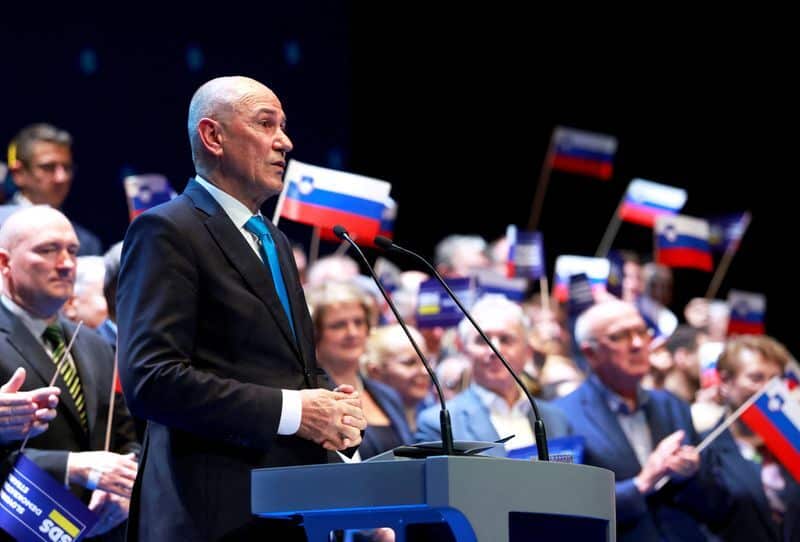
LJUBLJANA, March 19 (Reuters) - Slovenia holds a parliamentary election on Sunday in which liberal Prime Minister Robert Golob will face off against pro-Donald Trump populist Janez Jansa after a combative campaign marred by accusations of foreign meddling and government graft.
Opinion polls vary but analysts predict a tight race between Jansa’s Slovene Democratic Party (SDS) and Golob’s Freedom Movement (GS), with neither looking likely to win a majority in the 90-seat parliament. The outcome may be determined by smaller coalition partners.
At stake is the domestic and foreign agenda of the European Union and NATO member state of 2 million people, which gained independence from Yugoslavia in 1991.
Under Golob, Slovenia was one of the few European countries to recognise an independent Palestinian state and last year imposed an arms embargo on Israel amid its Gaza bombing campaign. That policy would likely change under pro-Israel former prime minister Jansa, who is an ally of Hungary’s veteran nationalist leader Viktor Orban.
Jansa has promised to overhaul Golob’s domestic agenda by introducing tax breaks for businesses and cutting funding for civil society, welfare and media.
“These are … perhaps the most important elections ever in Slovenia because they will decide if Slovenia remains a democratic welfare state or it aligns with illiberal democracies,” said Robert Botteri, a long-time editor at the Mladina weekly.
CAMPAIGN SOURS AMID CONCERNS OF FOREIGN MEDDLING
Slovenia, with a developed industrial base, emerged stronger from the fall of Yugoslavia than other states such as Serbia or Bosnia, which have been held back by war, economic sanctions and political infighting.
Problems remain, however. Golob’s GS secured a landslide victory in 2022 but has lost popularity in part for what some voters see as a failure to fulfil promises to improve public services like healthcare.
The election campaign became heated this month when covert videos were published on an anonymous website purportedly exposing government corruption, which Golob denies.
Then a report emerged this week alleging that Jansa met with officials from Israeli private spy firm Black Cube, raising fears of foreign election meddling. Jansa says he met with a Black Cube adviser but denies wrongdoing.
Meanwhile, Golob said he had discussed the issue with other European leaders.
French President Emmanuel Macron told reporters on Thursday he was aware of what he described as “clear and documented interference, disinformation and meddling from third countries” ahead of Slovenia’s election.
“Europeans must absolutely mobilise to protect our democracies from this kind of interference,” he said.
Golob’s party and activists have also complained during the campaign about dead animals being hung from their election posters across Slovenia. Reuters was unable to confirm who was responsible.
“This has certainly been a dirty campaign,” said Tereza Novak, a GS lawmaker campaigning on the main square in the capital Ljubljana.
Miha Kovac, a university lecturer, worries that the swirling rumours may demotivate voters.
“At the end of the day nobody will believe anybody. There will be a huge erosion of trust in society,” he said.
(Reporting by Daria Sito-SucicEditing by Edward McAllister and Gareth Jones)