By Phil Stewart and Idrees Ali
WASHINGTON, March 19 (Reuters) - The U.S. military is not rehearsing for an invasion of Cuba or actively preparing to militarily take over the island, the top general overseeing American forces in Latin America told lawmakers on Thursday.
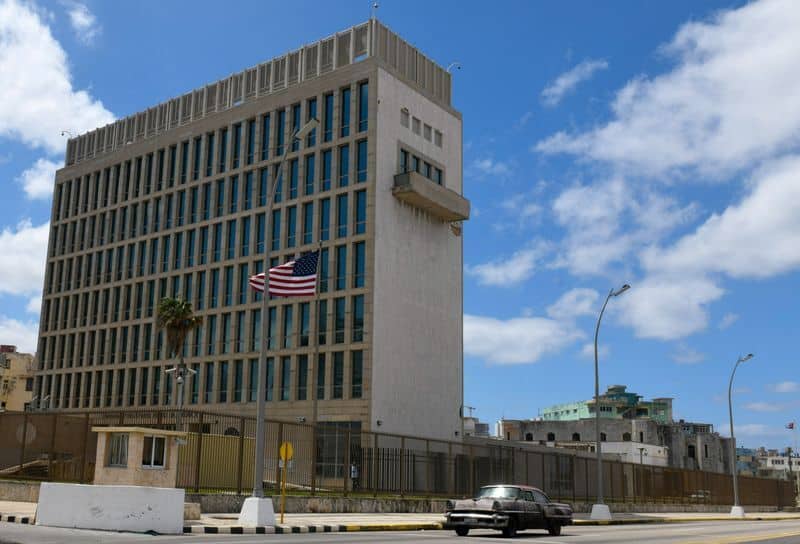
But the U.S. stands ready to address any threats to the U.S. embassy, defend its base at Guantanamo Bay, Cuba, and aid U.S. government efforts to address any mass migration from the island, if needed, General Francis Donovan, head of U.S. Southern Command, said.
Donovan’s remarks came during a Senate hearing focused on President Donald Trump’s increasingly muscular use of the U.S. military in Latin America, where his administration has re-asserted the idea that the region falls into Washington’s zone of influence.
Trump has launched military strikes on suspected drug boats and is expanding counter-narcotics alliances with pro-Washington governments in Latin America, even carrying out joint operations with Ecuador on the ground there earlier this month.
In January, U.S. special forces seized Venezuela’s then-President Nicolas Maduro in a raid on his Caracas compound and whisked him to New York to face drug-trafficking charges.
TRIP TO VENEZUELA
Donovan, who was the No. 2 at Special Operations Command at the time of the raid, made a surprise visit to Venezuela for security talks last month shortly after taking over the Latin America post.
Trump said on Monday that he expected to take Cuba “in some form” and that “I can do anything I want” with the neighboring country, which sits about 90 miles (180 km) south of Florida’s Key West. But so far, U.S. efforts appear aimed at creating economic leverage over the island.
Trump has piled tremendous economic pressure on Cuba by halting all Venezuelan oil shipments to the island, which has been forced to carry out severe energy rationing. Much of its economy has ground to a halt. On Monday, Cuba’s electric grid collapsed, leaving the country of 10 million people without power.
Asked whether the U.S. was conducting any military rehearsals that involve seizing, occupying, or otherwise asserting control over Cuba, Donovan said: “U.S. Southern Command is not.”
He was then asked whether he knew of any U.S. military command doing so, and Donovan responded: “No.”
Questions about U.S. next steps come as Cuba and the United States have opened talks aimed at improving their largely adverse relations, which have reached one of the most contentious moments in the 67 years since Fidel Castro overthrew what had been a close U.S. ally.
UNDER-INVESTMENT IN LATIN AMERICA
In the hearing, Donovan noted that Guantanamo Bay had suffered storm damage and needed fresh investment, along with other Caribbean locations that U.S. officials have long said suffered from under-investment over the past two decades, when the U.S. military’s focus was on combating militant groups like al Qaeda and Islamic State.
“I won’t pull any punches, it’s in rough shape,” Donovan said of Guantanamo Bay.
“Because of the hurricane damage, we’re down to one working pier and one refueling pier. I believe (the base) is a pivotal point for any operations in the Caribbean,” he added.
Donovan said the Department of Homeland Security, which oversees the U.S. Coast Guard, would be in the lead in any mass migration event from Cuba, which experts have long warned could follow a collapse of the Communist government in Havana. But he left open the possibility of setting up a camp at Guantanamo Bay for any overflow of migrants.
Asked about what U.S. forces were prepared to do if there were a security threat to Americans in Cuba, Donovan responded: “If it developed into a physical security threat to the U.S. embassy or the base at Gitmo, we would put U.S. troops to defend American lives.”
(Reporting by Phil StewartEditing by Bill Berkrot)