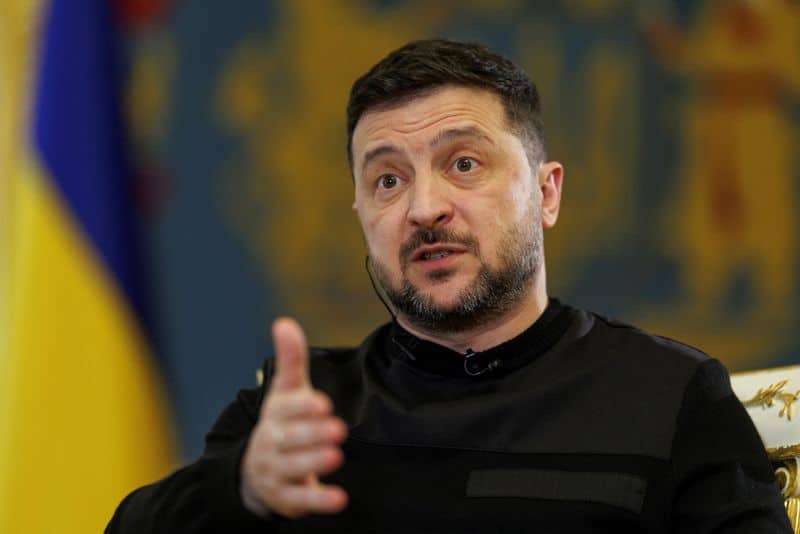
KYIV, March 25 (Reuters) - Russia sought to blackmail the United States by offering to stop sharing military intelligence with Iran if, in return, Washington would cut off Ukraine from its intelligence data, President Volodymyr Zelenskiy said on Wednesday.
Zelenskiy, who said on Monday that Ukraine’s military intelligence has “irrefutable” evidence that Russia is continuing to provide intelligence to Iran, told Reuters he had seen the data but provided no further details.
Speaking in his presidential compound in Kyiv, Zelenskiy said that some Iranian drones, used to attack U.S. military assets and its allies during the war in the Middle East, contained Russian components.
“I have reports from our intelligence services showing that Russia is doing this and saying: ‘I will not pass on intelligence to Iran if America stops passing intelligence to Ukraine.’ Isn’t that blackmail? Absolutely,” Zelenskiy said.
He did not say who, according to the reports, Russia was addressing the comments to. Russia has denied assisting Iran in its month-old conflict with the United States and Israel - a denial that Washington said earlier this month that it had also received directly from Moscow when the issue was discussed.
Ukraine, which has faced sustained attacks by Iranian-designed Shahed drones since Russia launched its invasion in 2022, is helping several Gulf states - including Saudi Arabia, the United Arab Emirates, and Qatar - to counter drone attacks on their territory, the president said.
Zelenskiy said he hoped that Ukraine would be able to reach long-term deals with some Gulf countries that would raise funds for the production of Ukrainian drone interceptors or receiving much-needed air-defence missiles.
(Reporting by Olena Harmash and Daniel Flynn; editing by Philippa Fletcher)