By Alistair Smout and Andrew MacAskill
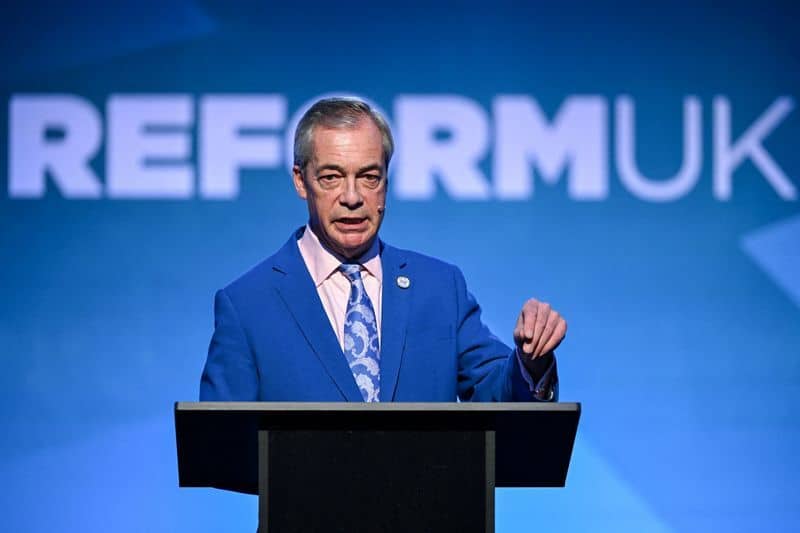
LONDON, March 25 (Reuters) - Britain should cap how much donors who are living overseas can give to political parties and pause cryptocurrency donations, an independent review said on Wednesday, a move that could hurt Nigel Farage’s populist Reform UK party.
The government ordered the review into foreign financial interference in politics after a former politician in Reform UK was jailed last year for taking bribes to make pro-Russia speeches and statements.
Last year, Reform became the first British party to announce it would accept donations in the form of bitcoin and at least two-thirds of the total money the party raised came from donors who live abroad.
Led by Farage, a veteran Brexit campaigner and friend of U.S. President Donald Trump, Reform is leading the governing Labour Party in opinion polls and raised more money than its rivals last year.
The review by Philip Rycroft, a former senior government official, recommended capping donations by Britons living abroad to parties at between 100,000 and 300,000 pounds ($402,390) each year, and a moratorium on crypto donations until a system to regulate them effectively is established.
“The threat of foreign financial interference in our politics is real, persistent and sustained,” Rycroft said, adding that the impact on Britain’s democracy was contained but the risks would not abate.
“The government must act quickly to further limit the risk of foreign financial interference in our politics.”
There are currently no limits in Britain on donations to parties if they come from individuals on the UK electoral register or from UK-registered companies or organisations such as trade unions.
Rycroft’s review said Britain faced a persistent problem of foreign countries, including Russia, China and Iran, trying to influence and undermine the country’s democracy.
But it said in addition to these hostile state threats, there was a “potential new threat: an emerging willingness of foreign actors and private citizens, including from allies like the United States, to interfere in, and influence, politics abroad in pursuit of their own agenda”.
In this environment, the review also recommended creating a police centre to investigate allegations of foreign interference in politics, reduce the burden of proof for criminal offences and look at toughening sentences.
($1 = 0.7455 pounds)
(Reporting by Alistair Smout and Andrew MacAskill; Editing by Arun Koyyur)