By James Mackenzie
BERLIN, March 27 (Reuters) - Germany’s Social Democrats meet on Friday to agree on new policy plans that their struggling leadership sees as the last chance for a party fast losing its status as one of the country’s political pillars.
The crunch session comes in the wake of two disastrous state election results for Chancellor Friedrich Merz’s coalition partners this month. The SPD, Germany’s oldest political party, got just 5.5% of the vote in Baden-Wuerttemberg and lost its 35-year-long hold on power in neighbouring Rhineland-Palatinate.
The far-right Alternative for Germany, now firmly established as the second-strongest political movement nationwide, has increasingly claimed the SPD’s traditional place as the party of the working class.
The Social Democrats’ own leaders acknowledge that many voters do not know what the party stands for.
“We are facing a deep crisis of confidence within the SPD, which we can overcome by tackling the task before us: driving forward reforms for this country,” joint party leader Baerbel Bas said this week after the Rhineland-Palatinate defeat.
More than two decades since former SPD Chancellor Gerhard Schroeder’s Agenda 2010 reforms opened the way for a prolonged period of stable finances and rising prosperity, Germany is again in the economic doldrums.
Increasing competition from China and the electric vehicles revolution have undermined its once-mighty auto sector. The war in Ukraine ended Germany’s access to cheap Russian energy and its ageing population has placed its welfare system under increasing strain.
Friday’s meeting of SPD party leaders, including state premiers and ministers, is intended to lay out the basis for the reform proposals the party will take into negotiations with Chancellor Friedrich Merz’s conservatives in the coming weeks.
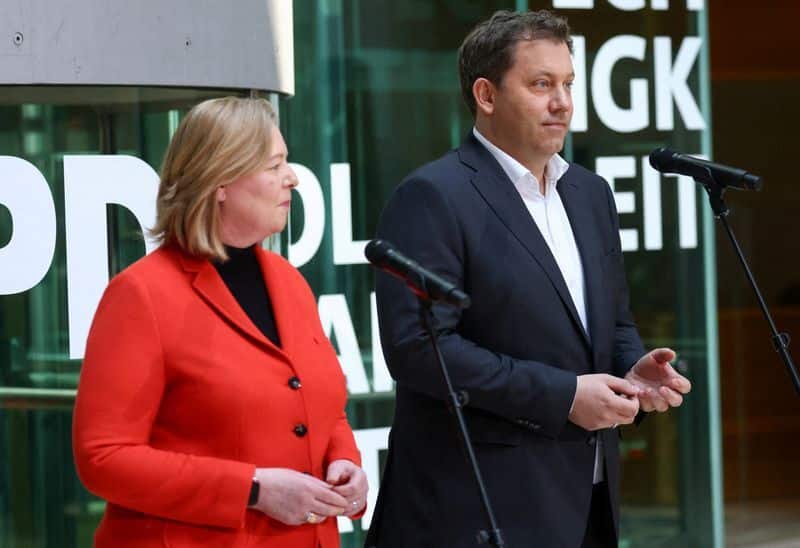
Finance Minister Lars Klingbeil, who shares the party leadership with Bas, says the SPD must return to representing the interests of working people and shed its image as “the benefits claimants’ party”.
He has called for tax reforms to help middle-income earners and is pushing for a mandatory, funded occupational pension scheme to shore up the creaking pensions system.
SPIRALLING COSTS
After a bruising battle over pension reform at the end of last year, that saw Merz forced to retreat by a revolt in his own party, the impetus for reform has slackened.
The government hopes to use the summer months to relaunch the reform agenda before elections in eastern Germany in September where the AfD may win power at state level for the first time.
Despite heavy internal pressure following the election defeats, Klingbeil and Bas have both said they intend to stay on and coordinate proposals covering tax, health, pensions and social welfare reforms that have been promised but not so far delivered.
After two years of recession in the shadow of the war in Ukraine, the economy has returned to growth but expectations have been immediately cut back in the face of trade barriers and a surge in energy prices caused by the war in Iran.
Companies have called with increasing urgency for less bureaucracy and measures to contain the rising cost of employing workers in Germany, where non-wage labour costs, including social security, health and pension contributions, currently run at 42.7% of gross wages.
While many in the SPD still resent the business-friendly welfare cuts forced through by Schroeder and remain suspicious of Merz’s conservative bloc, the urgency of the problems facing the party has helped put off potential challengers.
“We are part of a coalition, so it cannot be purely an SPD affair,” Bas told ARD television on Friday. “Lars Klingbeil and I will do everything we can to convince people, even within our own ranks, that it is necessary to make compromises so that this country can move forward.”
(Reporting by James Mackenzie; Editing by Andrew Heavens)