JERUSALEM/BEIRUT, April 17 (Reuters) - Israel and Lebanon have agreed to a U.S.-backed ceasefire in fighting between Israel and Iran-backed Hezbollah, a deal meant to enable broader U.S.-Iran negotiations but one that will see Israeli forces maintain positions deep inside southern Lebanon.
WHAT DOES THE DEAL SAY?
Israel and Lebanon agreed to implement a “cessation of hostilities” on April 16 at 2100 GMT for an initial period of 10 days to enable peace negotiations between the two countries, according to a text of the deal released by the State Department.
The deal says Lebanon’s government, with international support, would take “meaningful steps” to prevent Hezbollah and other groups from carrying out attacks against Israeli targets.
It also says that Israel and Lebanon recognise the country’s security forces “as having exclusive responsibility for Lebanon’s sovereignty and national defense”, a reference to a bid by the government since 2025 to disarm Hezbollah.
Under the agreement, “Israel shall preserve its right to take all necessary measures in self-defense, at any time, against planned, imminent, or ongoing attacks.”
Beyond this, “Israel will not carry out any offensive military operations against Lebanese targets, including civilian, military, and other state targets, in the territory of Lebanon by land, air, and sea,” the deal says.
The 10-day period can be extended by mutual agreement as talks progress and depending on whether “Lebanon effectively demonstrates its ability to assert its sovereignty”, it adds, in another reference to Lebanon’s efforts to disarm Hezbollah.
WHAT DOES THE DEAL LEAVE UNADDRESSED?
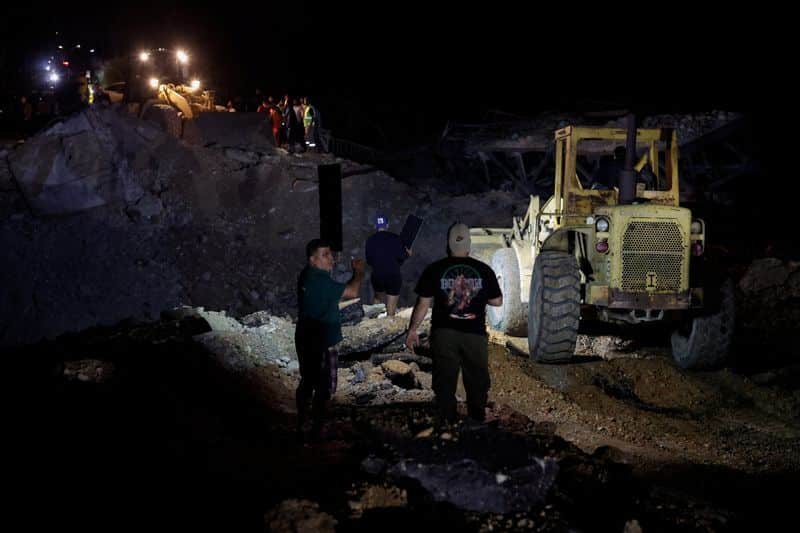
The deal does not require Israel to withdraw from southern Lebanon, where Israeli troops have been destroying villages and infrastructure after ordering residents south of the Litani River to flee. The area makes up about 8% of Lebanese territory.
Israeli defence officials say troops are holding positions as far as 10 km inside Lebanon as part of a “buffer zone” to prevent Hezbollah attacks on Israel, viewing the area and many of its villages as strongholds for the Iran-backed group.
While the deal grants Israel the right to take defensive measures against planned attacks, it does not include similar terms for Lebanon.
That marks a contrast to a 2024 deal to halt Israel-Hezbollah fighting, which said: “(These) commitments do not preclude either Israel or Lebanon from exercising their inherent right of self-defence, consistent with international law.”
Notably, the deal does not explicitly require Lebanon to disarm Hezbollah, although it does spell out which six Lebanese state security forces are allowed to carry arms.
The disarmament of Hezbollah has been a key demand by Israel. The group rejects calls to disarm, viewing its weapons as an element of national defence against Israeli attacks.
The deal also does not mention the fate of hundreds of thousands of Lebanese who fled the area south of the Litani, some of whom have already started returning home.
WHAT HAS HEZBOLLAH SAID ABOUT THE DEAL?
Hezbollah halted fire at Israeli targets when the ceasefire came into force but stopped short of publicly endorsing the deal.
It said any ceasefire must not grant Israel “freedom of movement” within Lebanon and that the continued presence of Israeli troops on Lebanese land granted people “the right to resist.”
HOW DID THE LAST LEBANON CEASEFIRE DEAL FARE?
After a war sparked by Israel’s assault on Gaza, Israel and Lebanon agreed in November 2024 to an open-ended, U.S.-brokered truce that called on Lebanon’s government to disarm Hezbollah.
That deal also committed Lebanon to restricting arms to specific state forces, and further stipulated that it should confiscate unauthorised weapons and prevent rearmament by non-state groups.
In June 2025, the U.S. proposed a roadmap to Lebanese officials to fully disarm Hezbollah in exchange for Israel halting its strikes and withdrawing its troops from five points they still occupy in southern Lebanon.
But Hezbollah and its main Shi’ite ally, the Amal Movement led by Parliament Speaker Nabih Berri, have said the sequencing should be reversed, with Israel withdrawing and halting strikes before any talks on Hezbollah’s arms.
Following the 2024 deal, Israel continued to carry out strikes on what it said were Hezbollah depots and fighters, in attacks that Medecins Sans Frontieres says killed 370 people in Lebanon.
WHAT ABOUT OTHER CEASEFIRES INVOLVING ISRAEL?
In Gaza, Israel and Hamas agreed last October to a U.S.-brokered deal to halt fighting and deliver aid into the territory. It was followed by a U.S. plan aimed at disarming Hamas in exchange for Israeli troop withdrawals and reconstruction of Gaza, much of which was destroyed by Israeli bombardment.
Many aspects of that plan have so far failed to take shape.
Israel has continued attacks on Gaza, killing more than 750 Palestinians since the ceasefire. Israel says it aims to thwart attacks by Hamas and other militant factions, but rarely provides verifiable evidence.
At least four Israeli soldiers have been killed by Gaza militants since October.
(Reporting by Rami Ayyub in Jerusalem and Maya Gebeily in Beirut; Editing by Aidan Lewis)