By Mubasher Bukhari and Saad Sayeed
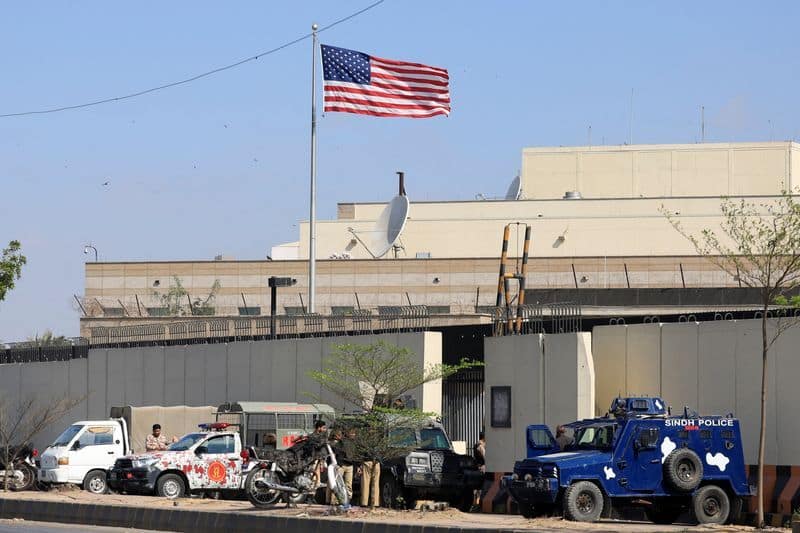
LAHORE, March 5 (Reuters) - Pakistan’s efforts to preserve close ties with President Donald Trump are being put to the test after protesters stormed the U.S. consulate in Karachi last week and poured onto streets elsewhere over the killing of Iran’s Supreme Leader Ayatollah Ali Khamenei in U.S. and Israeli strikes.
Islamabad is looking to balance the anger among its minority Shi’ite Muslim community, the second-largest in the world after Iran, and its alliance with Washington, underlined by its membership of Trump’s Board of Peace this year, where Israel also has a seat at the table.
Complicating the challenge is Pakistan’s worst fighting in years with Afghanistan, the other nation on its western border along with Iran.
Pakistan’s relationship with the U.S. has strengthened since Trump returned to the White House last year, ending more than a decade on Washington’s blacklist and providing a useful counterbalance to its troubled ties with India. The mercurial Trump has a close relationship with Field Marshal Asim Munir, the most powerful man in Pakistan.
Pakistan also maintains deep military, economic and political ties with Saudi Arabia and recently signed a strategic defence pact that states aggression against either state should be treated as an attack on both.
Saudi Arabia and other Gulf states have been targeted by Iran in its counter-strikes following the U.S. and Israel attacks.
“Pakistan is trying to maintain domestic peace by expressing solidarity with Iran, while it also risks being pulled into the orbit of the war by the U.S. and Saudis,” said Arsalan Khan, assistant professor at the University of Tennessee, Knoxville.
“If the war progresses, then it may find itself making trade-offs between domestic peace and its geopolitical commitments.”
The government has not commented on the issue, although a senior security official told Reuters: “Balancing relationships and blowback is the most pressing issue for Pakistan.”
‘NEW SPIRIT OF REVOLUTION’
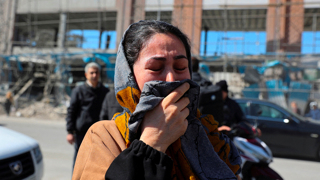
At least 26 people were killed as protesters clashed with police following news on Sunday of the death of Khamenei, seen by Pakistan’s Shi’ites as their spiritual leader. In Karachi, U.S. Marines fired on protesters who breached the walls of the consulate, two U.S. officials have said. Video footage of the incident showed some of the protesters were armed and fired into the compound.
Senior Shi’ite clerics in Pakistan have announced days of mourning and warned that more protests would follow, which could lead to bursts of instability in its main cities, analysts said.
Khamenei’s “death has not weakened the Shi’ites but united them with a new spirit of revolution and independence from the slavery of the U.S. and its allies,” Shi’ite cleric Sajid Ali Naqvi told Reuters.
Shi’ites, or Shias in the Urdu language, make up about one-fifth of Pakistan’s 240 million people. The vast majority of Pakistan’s people are Sunni Muslims.
The minority community has often been targeted in sectarian attacks, including by Islamic State and the Sunni Islamist group Tehreek-e-Taliban Pakistan.
A schism between Sunnis and Shi’ites developed after the Prophet Muhammad died in 632 when his followers could not agree on a successor. Emotions over the issue have boiled through to modern times, and have even pushed some countries to the brink of civil war.
PRODUCT OF PAKISTAN’S SECTARIAN HISTORY
Pakistan’s own political history, alongside Khamenei’s revered status, have shaped the Shi’ite response to the Iranian leader’s killing, said Madiha Tahir, an assistant professor at Yale.
While General Zia ul Haq unleashed a brand of Sunni Muslim Islamisation in Pakistan in the 1980s, the 1979 Iranian revolution created a new source of support and theological ties for its Shi’ites.
“Pakistani Shias found themselves marginalized in an increasingly sectarian state and vulnerable to violence,” Tahir said.
“At the same time, the Iranian Revolution meant that they could draw on Iran for aid. It had a profound effect on Shia communities and politics in Pakistan.”
For Pakistan’s Shi’ites, the Ayatollah in Iran turned into a defender of their identity, said Kamran Bokhari, senior director at the New Lines Institute in Washington.
“Add in anti-Americanism and anti-Israeli sentiment and you can see how this becomes a powerful potion,” he said.
‘LIKE OUR POPE’
Shi’ite leaders linked to the Millat-e-Jafaria network and other groups, including the cleric Naqvi, have called for protests and investigations into the killings of demonstrators, and demanded a criminal case against the U.S. consul general.
“He was our representative. He was like our pope,” said Syed Hussain Ali, who runs the digital platform Hussaini Khayal and organised a vigil to mourn Khamenei.
Officially, Pakistan Prime Minister Shehbaz Sharif has condemned Khamenei’s killing, calling it a “violation of international law”.
But he did not name the U.S. and also said “Pakistan stands in full solidarity with Saudi Arabia and our brotherly Gulf countries in this perilous time”.
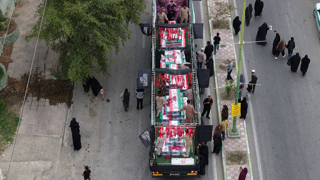
Analysts say the Shi’ite protests could fade in time but the deaths of demonstrators may keep tensions alive, especially with funerals for those killed drawing large crowds.
“Each one of those deaths is a reminder of the embattled place of Shias within Pakistan,” Tahir said. “There is definite potential for this to continue.”
(Reporting by Mubasher Bukhari in Lahore and Saad Sayeed in Bangkok; Writing by Ariba Shahid; Editing by Raju Gopalakrishnan)