By Mohammad Yunus Yawar and Ariba Shahid
KABUL/KARACHI, March 18 (Reuters) - Former heroin user Nazar Mohammad said the Kabul rehabilitation centre bombed by Pakistan cured him of his drug addiction two years ago and helped keep him alive. He even stayed on to work there as a live-in carer for the 2,000 patients.
Now he fears he could relapse.
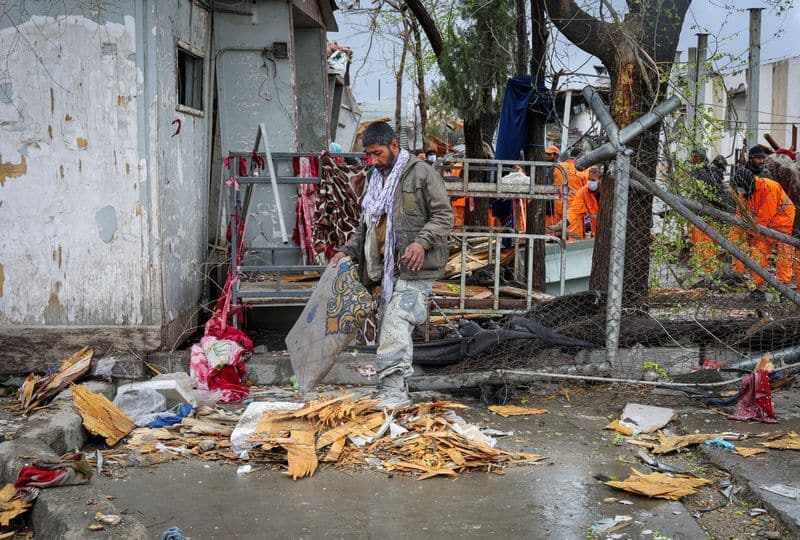
On Monday, he left the clinic and watched “as a plane dropped a bomb”, he said. He rushed back to find a scene of devastation.
“People were screaming from every direction. There were wounded and dead bodies everywhere…From under the rubble…we pulled out four people alive but wounded. The rest had died. The bodies were unrecognizable”
The Afghan Taliban government has said that more than 400 people were killed and 265 wounded in the air strike on Monday night. Those casualty numbers have not been independently verified. The United Nations Assistance Mission in Afghanistan told Reuters on Wednesday that 143 people were killed and 119 wounded in the attack.
Pakistan denies striking a rehabilitation centre, saying it “precisely targeted military installations and terrorist support infrastructure”.
Independent groups and witnesses have confirmed the rehabilitation centre was hit. A dispute is raging between Kabul and Islamabad over whether it was deliberately struck or a wrongly identified target.
Speaking from a part of the clinic that remained intact, Mohammad said he fears he will have to leave, and his future is uncertain in a country with scant medical facilities.
“I stayed in this camp (after treatment) because if I left, I was afraid I might become addicted again,” Mohammad told Reuters on Wednesday.
“We were able to fight it here and survive, but after this, I don’t know how we will overcome it,” he said.
CONFLICT AND ADDICTION
Mohammad said he had been “clean” for two years after undergoing a three-month treatment that involved detoxing for 15 days followed by medication. Some people are prescribed cold water baths, he said.
Patients were given three meals a day, he added – tea and bread in the morning followed by rice for lunch and dinner.
About 15% of Afghanistan’s estimated population of 40 million suffers from addiction, according to Ahmed Kassas, country director for the International Medical Corps.
Experts say the problem is fuelled by issues ranging from poverty and unemployment to physical pain and family challenges. The facilities that exist are stretched and overcrowded.
OPIUM BAN
The Taliban government banned narcotics cultivation in the country in 2022 – then the world’s top opium producer – and the land used to cultivate opium poppy dropped to 10,200 hectares in 2025, down from the 232,000 hectares prior to the ban, according to a U.N. estimate published in November.
The drop in opiate production has, however, spurred a move to synthetic drugs and misuse of pharmaceutical drugs, the U.N. said.
The destruction of a rehabilitation facility has wider implications than damaging the progress of its patients, said Vanda Felbab-Brown, senior fellow at the Washington-based Brookings Institution.
“You have very few treatment facilities in Afghanistan, so the loss of one as a result of fighting is a very hefty blow to the amount of services available,” she said.
FIGHT AGAINST KETAMINE ADDICTION
Ahmad Bilal Taimoori, a dentist and father-of-two, arrived at the Kabul rehab centre only 20 days before it was struck, to undergo treatment for ketamine addiction, which left him under the influence for about 22 hours a day.
He felt he was making progress, but now that has been shattered.
“My father brought me here. At first I was unhappy and did not want to stay, but after about a week, when I started to feel better, I myself wanted to recover,” he said.
(Reporting by Mohammad Yunus Yawar in Kabul and Ariba Shahid in Karachi, writing by Sakshi Dayal; Editing by YP Rajesh, Alexandra Hudson)