By Andreas Rinke, Ludwig Burger and John Irish
BERLIN/PARIS, March 18 (Reuters) - For a self-described Transatlanticist like German Chancellor Friedrich Merz, the language has been unusually blunt.
When President Donald Trump asked countries to join a global effort against Iran and deploy ships to prise open the Strait of Hormuz, whose near closure has held the global economy in a vice, he was rebuffed by some of America’s closest allies.
Merz told German lawmakers on Wednesday he agreed Iran must not be allowed to pose a threat to its neighbours but expressed doubts about the rationale behind the U.S.-Israeli war.
“To this day, there is no convincing plan for how this operation could succeed. Washington has not consulted us and did not say European assistance was necessary,” he told lawmakers.
“We would have advised against pursuing this course of action as it has been pursued. Therefore, we have declared that as long as the war continues, we will not participate in ensuring freedom of navigation in the Strait of Hormuz, for example, by military means.”
European leaders have rejected direct involvement in U.S.-Israeli military operations against Iran, wary of getting sucked into an unpredictable conflict whose aims they do not fully understand and is unpopular with their own citizens.
In doing so, they are calculating that the benefits of staying on the sidelines outweigh the multiple risks to Transatlantic ties that are already under severe strain over anything from the war in Ukraine to tariff disputes.
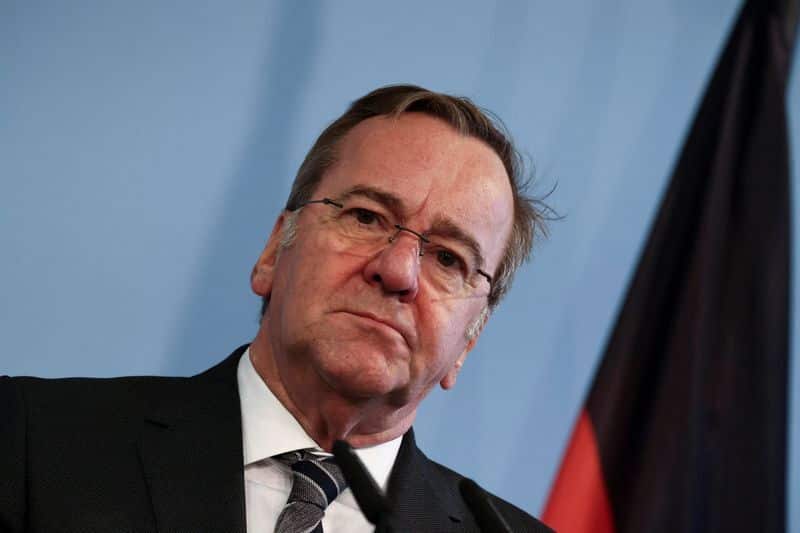
Merz’s Defence Minister Boris Pistorius was just as direct as his boss on Monday: “This is not our war, we have not started it.” Echoing Germany’s stance, French President Emmanuel Macron also said “We are not party to the conflict”.
EUROPEANS AGAINST IRAN WAR
Europeans have long been wary that angering Trump could mean he cuts them loose on Ukraine or tries to force Kyiv to accept a deal that favours Moscow. Even the very existence of the NATO alliance has come into question, with countries rattled by Trump’s designs on taking Greenland from fellow NATO member Denmark at the start of the year.
While giving no indication that he plans to punish NATO allies, Trump said they had made a “very foolish mistake” in failing to join the U.S. in its military operations in Iran.
Trump reserved particular scorn for British Prime Minister Keir Starmer, who he said was “no Winston Churchill”, Britain’s leader during World War Two.
But Starmer and others have public opinion on their side. A poll by YouGov suggested Britons opposed the attacks by 49% to 28%.
That has forced Nigel Farage’s populist Reform UK party and the opposition Conservatives to temper their initial support for the U.S. and Israeli strikes and even to offer some support.
“I’m Keir Starmer’s biggest critic, but the war of words coming from the White House is childish,” Conservative leader Kemi Badenoch said.
“I don’t like to see our Prime Minister be berated by foreign leaders,” Robert Jenrick from Reform UK said.
In Spain, Prime Minister Sanchez was quick to denounce the attacks on Iran as reckless and illegal and brushed off threats from Trump to cut trade with Spain if it did not allow jointly operated bases to be used for the war.
“We are certainly not going to be anybody’s vassals, we won’t tolerate any threats and we’ll defend our values,” Deputy Prime Minister Maria Jose Montero said earlier in March.
The government’s stance is widely shared by Spaniards, with 68% declaring in a poll by Spanish company 40db that they were opposed to the war.
A survey by ARD DeutschlandTrend showed 58% of Germans oppose the war while 25% support it. Criticism has even come from the far-right Alternative for Germany, a party that has courted the Trump administration.
“Donald Trump started out as a peace president - he will end up as a war president,” its co-leader Tino Chrupalla said.
EUROPEANS STRIVE TO MANAGE TRUMP’S UNPREDICTABILITY
European governments say they do not want to enter a war on which they were given no say and where they cannot see the endgame.
A European official, who asked not to be identified due to the sensitivities involved, said American war aims were not defined or clear, and were probably different from Israel’s war aims, notably on regime change.
In another sign of the strains, Merz and others have criticised Trump for loosening oil sanctions on Russia in an attempt to cool soaring global prices, suggesting the U.S. had blindsided its allies.
European powers have responded to the war in Iran but on their own terms.
Starmer has said Britain was working with allies on a plan to reopen the Strait of Hormuz, through which 20% of the world’s oil is transported.
France has sought to put together a coalition to secure the strait once the security situation stabilises - and without a U.S. role.
Paris has been consulting European, Asian, including India, and Gulf Arab states over the past week over a plan that would eventually see warships escort tankers and commercial ships.
Such a plan would involve political and technical talks, including with the maritime industry, insurers and others, said Macron: “This work will require discussions and de-escalation with Iran.”
In the end, European leaders have sought to project unity above all and learnt to manage what they see as Trump’s erratic leadership.
EU foreign policy chief Kaja Kallas told Reuters in an interview this week the bloc was “now more calm, because we are … expecting unpredictable things to happen all the time and take it as it is, put some ice in our hats, and be calm and stay focused.”
(Reporting by Ludwig Burger, Andreas Rinke, Alexander Ratz, John Irish, Michel Rose, Victoria Waldersee, Angelo Amante, Andrew Gray, Elizabeth Piper, Olena Harmash, Barbara Erling; writing by Matthias Williams; Editing by Jon Boyle)